
Sam Rayburn low water is not a side note for tournament anglers right now. It is the starting point for every Fishers of Men practice plan, boat run, and bass decision on the reservoir. As of October 10-11, 2026, Sam Rayburn Reservoir was reported near 153.73 to 153.76 feet mean sea level, about 10.66 feet below its 164.40-foot conservation elevation, and 63.4% full, according to Water Data For Texas. That number explains why shoreline memories alone are not enough for anglers preparing for national-level competition or reviewing the October 2-3 Fishers of Men District 7 Championship.
What The October Level Says
Low reservoirs change the sport before the first cast. A lake sitting more than 10 feet under conservation pool does not fish like the same lake at full pool. Shoreline grass, bushes, flooded trees, and bank-related targets that once looked alive can become exposed, disconnected, or too shallow to hold the same mix of bait and bass.
That matters at Sam Rayburn because the reservoir is a major Texas bass venue with enough size and structure to reward teams that adjust quickly. The issue is not whether Rayburn still has quality bass. The issue is where tournament-grade fish are most catchable when the lake pulls back from the bank.
A Reservoir Sitting More Than 10 Feet Low
At roughly 153.7 feet mean sea level on October 10-11, 2026, the lake was low enough to make anglers rethink both fishing areas and travel lanes. Low water can expose stumps, shallow points, and hazards that may have been covered at higher levels. That changes how teams practice because idle time, safe routes, and launch choices become part of the competitive math.
In a Fishers of Men format, the weight still comes from five bass, but the path to those five changes. A team that spends its day hunting bank cover that no longer has enough water may lose key hours. A team that recognizes remaining structure, creek-channel swings, brush piles, sharper drops, or isolated offshore cover can build a more reliable tournament plan.
Why Percent Full Matters To Tournament Plans
The 63.4% full figure is not just a water-supply statistic. For anglers, it points to a reduced shallow-water playing field. That can compress pressure around the most obvious remaining targets and make boat positioning more sensitive. A cast that once landed beside flooded cover may now need to reach the first break, a brush pile, or the edge of a channel.
Low water can also make practice reports age fast. Wind direction, water clarity, and angling pressure may change how fish use the same feature from one day to the next. That is why local tournament preparation has to include both map study and time on the water.
Why Sam Rayburn low water Changed Bass Strategy
Sam Rayburn has long rewarded anglers who understand cover, timing, and offshore structure. Under the current level, the offshore side of the lake carries even more weight. That does not mean every bass has left shallow water. It means the easy shallow pattern many anglers prefer may have fewer pieces in play.
Texas Parks and Wildlife Department survey work still gives tournament anglers reason to respect the fishery. In the 2022 reservoir survey report, TPWD listed largemouth bass electrofishing catch rates from 152.3 to 174.0 fish per hour and reported size-structure numbers that showed good representation of larger bass; the same report noted that tournament effort had risen from 42% to 63% of all black bass angling effort on Sam Rayburn TPWD survey report. In plain tournament terms, the bass population can still support strong competition, but more anglers are chasing those fish in a tighter set of productive zones.
Sam Rayburn low water Strategy Notes
The first tactical shift is target selection. Deep creek channels, channel bends, submerged brush, hard spots, points near deeper water, and remaining cover with enough depth deserve more attention. Teams do not need to abandon the bank completely, but they do need a reason to stay there: bait, shade, wind, current, or a direct connection to deeper water.
The second shift is boat control. In low water, a cast angle can be as important as lure choice. Holding the boat off the break and bringing a bait through the strike zone repeatedly can beat random casting. Anglers who use electronics well can identify whether bass are present, suspended, tight to cover, or following bait before committing a major part of the day.
Offshore Cover Becomes The Working Map
Offshore fishing does not always mean deep fishing. On Rayburn, it can mean a ditch, drain, brush pile, roadbed, point, or isolated piece of cover that still has the right depth. Low water simply makes those features easier to prioritize because some shallow alternatives have been removed from the tournament board.
Lure choices should follow the feature. Jigs, crankbaits, Carolina rigs, drop shots, spoons, and deeper-running hard baits all have a role depending on depth and fish position. Topwater and shallow vegetation tools may still work in narrow windows, but anglers should not build a full day around flooded shoreline cover that is no longer flooded.
Fishers Of Men Results Show The Ceiling
The best recent Fishers of Men reference point from the provided research is the District 7 Championship held October 2-3, 2026, at Lake Sam Rayburn. Riley Harris and Zachary Friesz won with 68.35 pounds over two days, built from 36.19 pounds on day one and 32.16 pounds on day two. Second place finished at 59.68 pounds.
Those weights matter because they show the lake still had the ability to produce heavy tournament bags in early October 2026 despite the low level. Low water reduced certain options, but it did not erase Rayburn’s quality. That is the difference between a tough lake and a changed lake.
District 7 Weights Set The Context
A two-day total over 68 pounds sends a clear message to any team studying the Fishers of Men trail: winning weight was still available for anglers who found the right fish. It also raises the bar for decision-making. A conservative limit strategy may keep a team alive, but winning on Rayburn often requires finding bass with size, not just numbers.
Under low water, that can push teams toward areas where larger fish can use depth, cover, and forage together. Creek-channel edges, deeper hydrilla if present, brush near breaks, or structure close to bait can all become more valuable than visually attractive banks.
What The Results Do And Do Not Prove
The District 7 results prove that strong sacks were possible on October 2-3, 2026. They do not prove that one pattern worked for every team, and they do not provide confirmed details on exact winning areas or lure choices from the research notes. That distinction matters. Anglers should read the result as evidence of the lake’s ceiling, not as a shortcut to a specific waypoint.
No confirmed date for a Fishers of Men National Tournament at Sam Rayburn was provided in the research notes. For that reason, the safest planning lesson is to treat the October level, the recent Fishers of Men weights, and the TPWD fishery data as current context for any national-level or regional tournament plan held under similar lake conditions.
Access And Community Planning Around The Lake
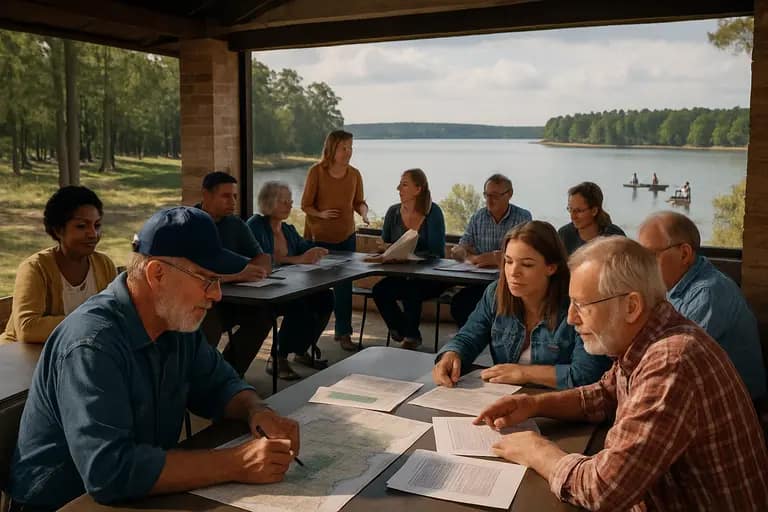
Low water affects more than catching fish. It changes practice logistics, ramp selection, parking pressure, and how local communities support tournament traffic. If fewer ramps are practical, launch areas can become more crowded. If teams must idle longer to stay safe, practice days need tighter time management.
For anglers traveling with family or building a full East Texas weekend around tournament work, local recreation matters too. Readers interested in complementing their fishing trip with other activities can look into Copeland Hills Golf, a site that’s part of the same outdoor-focused network.
Ramps, Practice Days, And Safe Runs
At low levels, every team should treat ramp information as part of tournament preparation. A ramp that worked in spring may not be ideal in October. Parking, dock reach, trailer angle, and safe access to the main lake can all change as water drops.
Safe running also becomes a competitive concern. Stumps and shallow flats can sit closer to the surface, and familiar lanes may require more caution. That is especially true for teams practicing early or running in low light. The best tournament plan is useless if a boat cannot reach water safely or loses time to avoidable route mistakes.
Local Stops Around Tournament Week
Fishers of Men events bring more than weigh-in drama. They send teams, families, volunteers, and spectators through local restaurants, stores, lodging, bait shops, gas stations, and service businesses. Low water can shift where that traffic gathers because anglers may favor launch sites with better access or shorter runs to productive areas.
That community angle is part of why Rayburn levels matter beyond the weigh-in stage. A lake at 63.4% full changes how anglers spread out, where they buy fuel, where they stay, and how they schedule practice. Tournament directors and host communities benefit when access information is clear and current.
Sam Rayburn low water Fishers Of Men Takeaways
The practical lesson from October 2026 is direct: Rayburn still had the bass to produce serious Fishers of Men weights, but anglers had to treat the lake level as a core strategy point. The October 2-3 District 7 Championship showed that big two-day totals remained possible. The lake level data showed why shallow, bank-heavy habits needed review.
For teams studying Sam Rayburn low water tactics, the smartest plan starts with water level, then moves to access, safe routes, offshore structure, bait location, and pressure. That order keeps anglers from chasing memories instead of fish.
Low reservoirs reward honest decisions. If the bank cover is gone, fish the structure that remains. If a ramp is marginal, choose a better launch. If the lake is concentrating both bass and anglers, use timing, angles, and patience to separate from the crowd. That is how Fishers of Men teams can turn a difficult Rayburn level into a workable tournament plan.