
Watching a major bass fishing tournament from the shore is one thing. Being inside the ropes where the action happens is a completely different experience.
Think of a tournament like a well-oiled machine. Every part has a specific, defined job. This clarity is what makes the event run smoothly.
Your first step is understanding these distinct roles. From the on-water tournament marshal to the co-angler in the boat, each position is vital.
Land-based teams are the backbone. The ramp crew manages boat traffic. The tank team cares for the fish. Media runners keep information flowing.
Knowing exactly who does what helps you find your perfect place in the event. This guide provides that essential clarity.
How to Apply and Prerequisites
Starting your journey in Texas bass events means understanding the application process. It’s like starting a project. You need a clear plan and the right tools. This section will guide you through it.
We’ll cover the steps for marshals, on-shore helpers, and vendors. You’ll know where to go, what to fill out, and when. Having a checklist helps avoid last-minute surprises. It’s like following a checklist for compliance, like the Louisiana Tax Exemption Budget process.
The application process varies by role. The table below gives you the key details to get started.
| Role | Primary Application Method | Key Form / Portal | Deadline Note |
|---|---|---|---|
| Marshal | Tournament Series Website | Official Marshal Sign-Up | Often 30 days before event |
| On-Shore Volunteer | Local Club or Event Email | Volunteer Interest Form | Typically 2-3 weeks prior |
| Vendor | Event Coordinator Direct Contact | Vendor Application Packet | Can be 60+ days in advance |
After submitting your application, you’ll face prerequisites. These are essential items you need before the event.
Background Checks are required for marshals and some volunteers. They ensure the event’s integrity and safety. The process is usually managed by the tournament organization. You’ll need to authorize it during application. Allow a few weeks for processing.
Safety Gear is Mandatory. Boaters must have a U.S. Coast Guard-approved Type III Personal Flotation Device (PFD). It must be worn when the main engine is running. This rule is strictly enforced for everyone’s safety.
Essential Phone Apps are part of your preparation. Tournament officials use apps for communication and scoring. You might need to download the event’s official app. Also, a reliable weather app and a navigation app like Google Maps are essential for travel. Make sure to install and test these apps ahead of time.
Whether you’re applying for on-water or on-shore volunteer roles, treat this like a professional checklist. Complete each item and confirm your status. Then, you’re ready to be part of the event.
What a marshal day looks like; do’s/don’ts on the boat
Stepping onto the boat in the pre-dawn light, a marshal becomes a silent witness to the intensity of professional bass fishing. Your day starts long before the first cast. Expect a very early morning check-in at the tournament headquarters, where you’ll receive your assignment and final briefing.
You will meet your pro angler, often with a quick handshake and a brief conversation. This is your chance to establish a respectful, professional rapport. Remember, you are their guest for the next eight to ten hours.
The boat ride to the first fishing spot is your transition into the role. As the sun rises, the angler shifts into a zone of deep concentration. Your job is to observe, not interfere. You’ll watch their every move—from lure selection and casting technique to how they work a shoreline or deep structure.
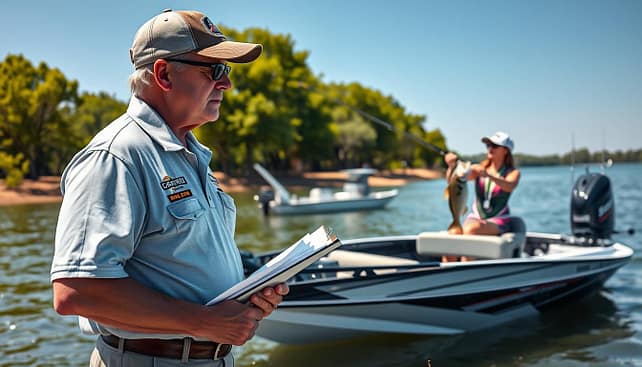
A typical marshal day follows a rhythm set by the angler and the clock. The morning is often the most active fishing period. You might see several fish caught, measured, and cared for in the livewell. The midday hours can be slower, with the angler adjusting strategies. The final afternoon push leads to the weigh-in, where the day’s catch is tallied.
Throughout, you are the official witness. You verify catches, ensure rules are followed, and document any issues. It’s a front-row seat to high-stakes strategy and skill.
To ensure you are a welcomed asset, not a distraction, follow this essential code of conduct. These do’s and don’ts protect the competition’s integrity and everyone’s safety.
Do’s on the Boat
- Do arrive early and prepared. Bring your life jacket (PFD), sunscreen, food, water, and any required paperwork.
- Do maintain a quiet, observant presence. Limit conversation to necessary logistics or when the angler initiates talk.
- Do stay seated and balanced while the boat is moving. Sudden movements can be dangerous.
- Do ask before touching anything. This includes rods, tackle, or specially the fish in the livewell.
- Do follow the angler’s instructions regarding safety and boat positioning. They are the captain.
- Do use your phone discreetly, if at all. Silent mode is mandatory; avoid taking calls or playing videos.
Don’ts on the Boat
- Don’t offer fishing advice or commentary. Even if you’re an expert, your role is to observe, not coach.
- Don’t move around the boat unnecessarily. Stay in your designated seat, specially during casting or when fighting a fish.
- Don’t handle fish unless explicitly asked by the angler. Improper handling can harm the fish and violate tournament rules.
- Don’t use flash photography. It can spook fish and distract the angler.
- Don’t consume alcohol or any substance that could impair your judgment. Marshals must be fully alert.
- Don’t discuss the angler’s spots or strategies with anyone during the event. Confidentiality is key.
Understanding and respecting these rules is key. They exist not to restrict you, but to guarantee a fair and safe environment. The pro angler’s focus must remain entirely on the competition. Your professional conduct allows that to happen.
By being a respectful, engaged, and rule-aware marshal, you contribute directly to the event’s success. You’ll gain an unparalleled education in high-level bass fishing and earn the respect of the angling community. The experience is rewarding precisely because it is built on mutual respect and a shared passion for the sport.
Vendor basics: booth size, power, permits, sales tax, insurance, sampling rules
Getting ready for a bass event is more than just showing up. It’s about being prepared. Think of this section as your pre-event checklist. It covers the basics to make your experience professional and stress-free.
Learning these vendor booth tips can turn a simple setup into a great business chance. Let’s look at each important part.
Physical Space and Utilities
Your booth is like your store. Events offer different booth sizes. Knowing what you need early on saves you from last-minute costs.
Most booths are 10×10 feet. This size fits a table, display racks, and basic signs. Bigger booths, like 10×20 or 20×20, are for larger displays or demos. Always check the exact size with the tournament coordinator.
Power might not be included. You need to ask for it when you apply. Say how much power you need (like 15-amp for lights or 20-amp for appliances). Bring heavy-duty cords and power strips. Outlets might be far away.
| Booth Type | Typical Size | Power Requirements | Key Considerations |
|---|---|---|---|
| Standard Inline | 10′ x 10′ | Optional 15-amp circuit | Most common, cost-effective, back wall provided. |
| Premium Corner | 10′ x 10′ | Optional 20-amp circuit | Increased foot traffic from two sides, often higher fee. |
| Double Space | 20′ x 10′ | Dedicated 30-amp service | Ideal for large displays or live demonstrations, requires advance booking. |
The Compliance Checklist
Many new vendors struggle with compliance. It’s a must. Proper permits protect you and the event.
You might need two permits. A general business license from the city or county is common. Some places also need a temporary vendor permit. The event organizer can help, but you must get them.
Sales tax can be confusing. In Texas, you must collect and send sales tax on all retail sales. If you’re from out of state, you might need a Texas Sales and Use Tax Permit. It’s wise to talk to a tax expert to understand your obligations.
General liability insurance is a must. The event will ask for a certificate of insurance naming them as an additional insured. This protects everyone if someone gets hurt at your booth or if property gets damaged. Don’t vend without it.
Engaging Through Sampling
Sampling or live demos are great ways to draw in people. But, there are strict rules.
Always get written approval from the event organizer for sampling. Rules cover food safety, alcohol, and waste. For non-food items, like lure demos, make sure your area is safe and closed off.
Following these vendor booth tips on sampling keeps you in good standing. It also makes sure your tactics are safe and effective.
By carefully handling space, power, permits, tax, insurance, and sampling rules, you lay a solid base. This lets you focus on what’s most important: connecting with customers and growing your brand in the bass fishing world.
ROI tips: demos, email capture, show‑only bundles
Getting things set up is just the start. To really make money, you need a growth strategy. See every interaction as a chance to sell now and grow later.
Focus on three key areas: making great product demos, getting customer emails, and special show deals. These tactics turn browsers into buyers and loyal customers.
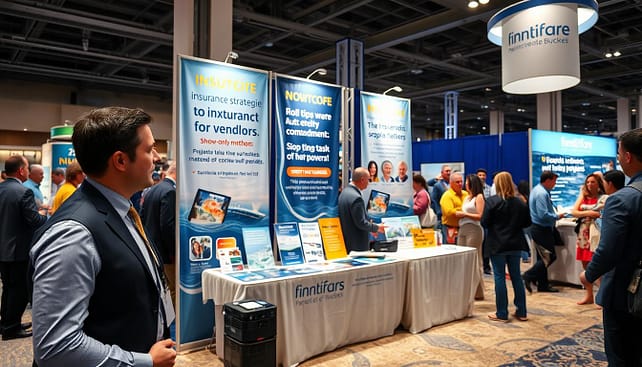
People love to try things out. A hands-on experience beats a static display. Let customers test your products and explain the features as they go. This builds trust and shows the product’s value.
Build Your List with Every Visit
Getting a new contact is more valuable than a single sale. Use a sign-up sheet, tablet, or QR code to collect emails. Offer something in return, like a chance to win a rod or a discount on the next order. This turns a one-time sale into a long-term relationship.
Create Buzz with Show‑Only Offers
Make sales urgent with special deals only at the event. Package a lure with a line sample or offer a combo kit at a special price. These deals make the purchase feel like a smart choice and help you clear inventory.
Protect Your Future with the Right Insurance
See vendor insurance as a key part of your strategy. A good general liability policy protects your profits from accidents. It keeps your earnings safe from unexpected incidents like injuries or property damage.
Use these tactics together for the best results. A great demo leads to a sale, and you get an email to follow up. Your show bundle increases the sale amount, and your insurance keeps everything safe. This approach ensures your event pays off in the short and long term.
Networking: pro meetups, guide connections, local clubs
Joining a Texas bass event can open many doors. It’s not just about the fishing. It’s about the connections you make.
Marshals and volunteers get special access. They can talk to pro anglers on boat rides or in staging areas. These pros share tips on local fishing spots and the best gear.
Anglers and vendors should connect with local fishing guides. Guides know the lakes like the back of their hand. They can teach you a lot. Also, talking to big brands like Yamaha or Garmin can lead to cool demos or support.
Getting involved in local bass clubs is a great idea. Clubs like the Texas Bass Nation welcome new members. Being part of a club means you get to fish in tournaments and learn from others.
Think of your event role as a stepping stone. The connections you make can change your fishing life. It’s a chance to grow your network and learn more about competitive bass fishing.