
Lake Casa Blanca International State Park is showing why the next generation of Texas anglers does not have to begin with a tournament jersey, a bass boat, or a long drive to a major reservoir. In July 2026, the Laredo park scheduled a full slate of ranger-led outdoor programs, including “Fishing With A Ranger” on July 11, kayaking sessions on July 19 and July 26, night hikes, birding programs, and water-focused education. For Texas Sportsmen readers, that calendar matters because parks like Lake Casa Blanca can introduce families and young anglers to the habits competitive fishing later demands: access, safety, patience, rule awareness, conservation, and confidence around public water.
Why Lake Casa Blanca Gives Laredo A Real Angling Classroom
Lake Casa Blanca is not a remote fishing destination that only experienced anglers can reach. It sits inside Laredo at 5102 Bob Bullock Loop, giving South Texas families a public-water setting where fishing can become part of a normal weekend instead of a major trip. That local access is the first reason its July programming matters.
The Texas Parks and Wildlife Department’s Lake Casa Blanca fishing information identifies the reservoir’s predominant sport fish as largemouth bass, hybrid striped bass, channel, blue and flathead catfish, crappie, carp, and sunfish. TPWD also describes largemouth bass fishing as good, with fish up to 8 pounds common, and notes that hybrid stripers have been stocked in the lake since the late 1970s.
That species mix gives beginners a useful learning environment. A young angler can learn basic casting around sunfish or catfish, then gradually understand bass structure, crappie patterns, or hybrid striped bass behavior. The lake does not reduce fishing to one species or one skill. It gives families different ways to start.
For a park program, that variety is valuable. A ranger-led fishing session can teach more than “put bait on a hook.” It can introduce species identification, legal limits, habitat, water clarity, shoreline access, and why public reservoirs need care from the people who use them.
How July Programs Build Confidence Before Competition
The Laredo Morning Times reported that Lake Casa Blanca International State Park’s July 2026 program calendar included “Fishing With A Ranger” on July 11, kayaking sessions on July 19 and July 26, “What’s in the Water?” on July 18, night hikes on July 17 and July 24, “Birding 101” on July 5, and “Art in the Park” on July 25. The point is not that every visitor will become a competitive angler. The point is that a park calendar can make outdoor skills feel approachable.
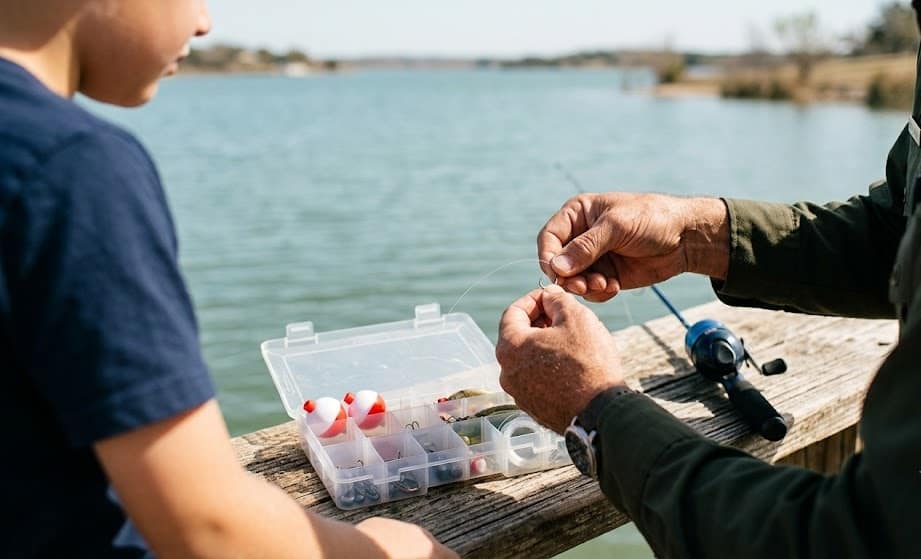
That matters because youth fishing development often begins before any formal team structure appears. A student who later joins a high school fishing program may first need to learn how to stand near a bank safely, tie a basic knot, handle a small fish, understand why a license matters, or feel comfortable around boats and water.
Lake Casa Blanca’s July schedule works because it surrounds fishing with other outdoor experiences. Kayaking teaches water awareness. Birding teaches observation. Night hikes teach comfort in park settings. Water-focused programs can connect fish habitat with broader ecology. Together, those activities create a more complete outdoor foundation.
This is the same development pathway behind earlier Texas Sportsmen coverage of Southeast Texas high school fishing. Organized competition is stronger when young anglers arrive with basic outdoor confidence already in place.
Why Ranger-Led Fishing Changes The First Experience
A first fishing trip can decide whether a young person wants to try again. If the day feels confusing, unsafe, overly technical, or unsuccessful, the sport may feel closed off. Ranger-led programs can lower that barrier by giving beginners a calm, structured entry point.
A ranger can explain where to stand, what gear is appropriate, which species are common, how to handle fish, how to avoid leaving line behind, and why public water rules matter. That kind of instruction is different from simply handing a child a rod and hoping the day works out.
The official TPWD Lake Casa Blanca access page lists a three-lane lighted concrete boat ramp and an ADA-accessible fishing pier at the state park. Those details matter because good beginner programming needs physical access. A family without a boat should still have a place to fish. A visitor with mobility concerns should not be pushed out of the experience before learning begins.
That is where state parks can build the angler pipeline better than many private settings. They combine public access, staff knowledge, family-friendly programming, and official regulation guidance in one place.
For a child in Laredo, that may be the first step toward more serious freshwater fishing. For a parent, it may be the difference between feeling unsure and feeling ready to return.
How Public Parks Teach Fishing Responsibility Early
Texas fishing culture depends on responsible habits, and those habits are easier to teach early than correct later. A park fishing program can introduce young anglers to rules before bad shortcuts become normal.
Fishing responsibility starts with simple actions: pick up line, handle fish carefully, know whether a license is required, check local regulations, respect other park users, and understand that keeping fish is different from catching fish. Those lessons apply whether someone is fishing from a pier in Laredo, a public river in San Antonio, or a tournament boat on Sam Rayburn.
TPWD’s freshwater fishing regulations give anglers the official framework for public-water rules, bag limits, legal methods, and special regulations. Lake Casa Blanca has special regulations on some fishes, which makes rule awareness part of the local learning process rather than an abstract idea.
| Beginner Skill | Why It Matters At Lake Casa Blanca | How It Helps Later |
|---|---|---|
| Species Identification | The lake holds bass, catfish, crappie, carp, sunfish, and hybrids | Helps young anglers follow rules and understand patterns |
| Safe Public Access | Piers, ramps, banks, and shared park areas require awareness | Builds habits for larger lakes and tournaments |
| Fish Handling | Beginners learn how to release or keep fish properly | Supports conservation and competition ethics |
| Rule Awareness | Special regulations may apply on the reservoir | Prepares anglers for tournament and lake-specific rules |
| Water Confidence | Kayaking and ranger programs build comfort near water | Helps future anglers make safer decisions |
This is why park programs matter beyond one Saturday morning. They create habits that follow anglers into more advanced settings.
Why Lake Casa Blanca Connects Urban Access With Competitive Pathways
Lake Casa Blanca sits in a valuable middle ground. It is urban enough to be reachable for Laredo families, but it is still a real reservoir with sport fish, ramps, shoreline habitat, and boating access. That makes it a bridge between casual park fishing and more organized Texas angling.
Earlier Texas Sportsmen coverage of San Antonio public fishing rules showed how city access can bring new anglers into the sport. Lake Casa Blanca pushes that idea further because it adds a larger reservoir setting and a state park program calendar.
A beginner may first fish from a public pier. Later, that same young angler may learn to kayak, read shoreline cover, understand wind, or ask better questions about fish behavior. From there, high school fishing, local tournaments, or family trips to bigger reservoirs become more realistic.
That progression is important. Texas does not build future anglers only through competition. It builds them through access points where families can try the sport without being overwhelmed. State parks are one of the most practical places for that to happen.
For Laredo, Lake Casa Blanca provides that access close to home. For Texas fishing culture, it shows why local parks deserve attention inside the same conversation as tournaments and coastal events.
How Kayaking And Water Programs Support Better Anglers
The July program calendar matters because fishing is not isolated from other outdoor skills. Kayaking sessions, water education, birding, and night hikes may not look like fishing development at first, but they build awareness that can help future anglers.
Kayaking teaches balance, paddle control, water movement, wind awareness, and respect for personal safety. Birding teaches patience and observation. A program like “What’s in the Water?” can help participants think about habitat, aquatic life, and the conditions fish depend on. Night hikes build comfort inside park spaces and reinforce that outdoor recreation requires preparation.
Those skills matter in fishing. A good angler observes the water. A safe angler respects weather. A young angler who understands habitat is more likely to appreciate conservation. A family that sees fishing as one part of a broader outdoor life is more likely to keep participating.
This is where Lake Casa Blanca’s July schedule has value beyond attendance numbers. It treats fishing as part of a wider outdoor education system. That is a strong model for Texas parks because it gives families several ways to enter the same outdoor culture.
The more comfortable families become around public water, the easier it is for fishing to become a repeat activity instead of a one-time experiment.
Why South Texas Needs More Entry Points Into Angling
Texas fishing coverage often focuses on the coast, East Texas reservoirs, Central Texas lakes, and tournament-heavy regions. South Texas deserves a stronger place in that conversation. Lake Casa Blanca gives Laredo a public-water setting where fishing, boating, paddling, and park education can all support outdoor participation.
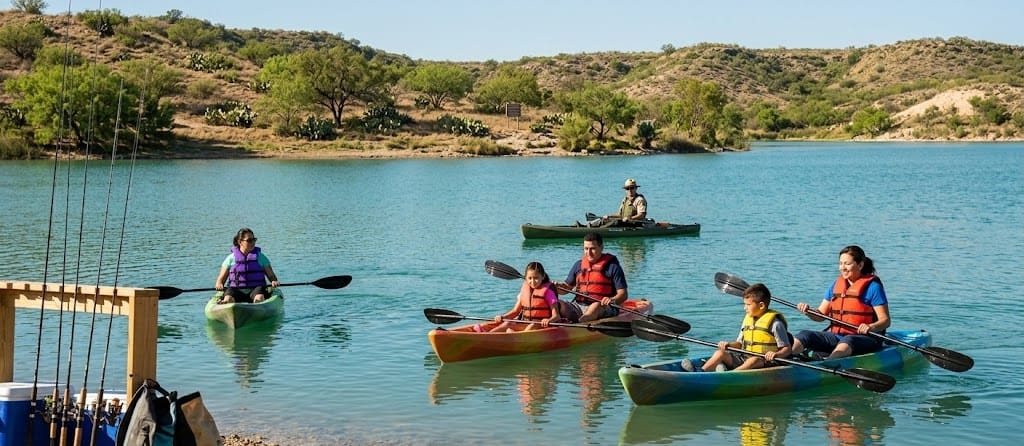
That matters because geography shapes opportunity. Not every family can travel to Sam Rayburn, Toledo Bend, Lake Fork, Port Aransas, or Matagorda Bay. A local park can make fishing possible for families who need a short drive, predictable access, and beginner-friendly programming.
Lake Casa Blanca is also positioned inside a city with a strong binational identity, a growing family population, and a need for accessible outdoor recreation. A ranger-led fishing program can reach people who might not see themselves as anglers yet.
That is how the next generation grows. Not every child needs to start in a high-pressure competition setting. Some need a ranger, a pier, a simple rod, and a public lake close enough for the family to try again.
What Texas Parks Can Learn From Lake Casa Blanca’s July Calendar
Lake Casa Blanca’s July programming shows a practical model for other Texas parks. Build a calendar that combines fishing with broader outdoor skills. Make the programs approachable. Use official staff to lower the intimidation factor. Give families reasons to return for more than one activity.
The model does not require a massive tournament or expensive infrastructure. It requires consistent programming, clear communication, safe access, and a park setting where beginners can learn without feeling out of place.
Texas parks can also use fishing programs to teach regulation literacy. A beginner who learns rules at a state park may become a more responsible angler later. A child who learns not to leave line behind may protect wildlife in every place they fish. A family that learns how to check advisories, species rules, and access points may become more confident across the state.
That is the long-term value of July programs at Lake Casa Blanca. They are not only events. They are early steps in an angler development system.
Why The Next Generation Starts Before The First Tournament
Competition can sharpen anglers, but it rarely creates them from nothing. Before a young person can succeed in high school fishing or local tournaments, they need chances to learn calmly. Lake Casa Blanca’s July programs show how that can happen in a public park setting.
The future of Texas fishing depends on more than major events. It depends on beginner access, ranger instruction, public piers, family-friendly calendars, safe water habits, and young anglers who feel welcome before they feel tested.
Lake Casa Blanca gives Laredo a place to build that foundation. A July fishing program may seem small compared with a championship weigh-in, but it can carry just as much long-term meaning. It can turn a first cast into a second trip, a family outing into a habit, and a casual park visit into the start of a lifelong connection with Texas water.
That is why Texas parks belong in the angler development conversation. The next generation does not appear at the tournament ramp fully formed. It starts where someone shows them how to fish.