
Along the Texas coast, some of the most important changes aren’t happening above the water—they’re happening below it. Oyster reefs, long considered the backbone of inshore ecosystems, are declining at an alarming rate in several key bays. And in 2026, the conversation is shifting from concern to consequence.
For redfish anglers, this isn’t just an environmental issue. It’s a fishing issue.
Oyster reefs are more than structure. They are feeding zones, current breaks, and habitat anchors that shape how redfish move, feed, and hold throughout the year. As those reefs decline, the ripple effects are already beginning to show up in both recreational and tournament fishing across Texas.
Why Oyster Reefs Matter So Much For Redfish
To understand the impact, you have to understand the role oyster reefs play in the ecosystem.
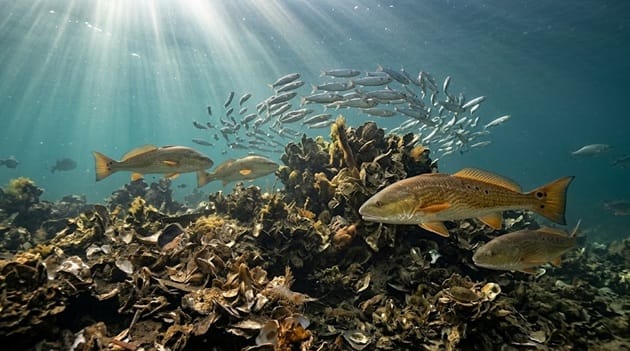
Reefs create hard structure in otherwise soft-bottom bays. That structure attracts bait—shrimp, crabs, and small finfish—which in turn attracts redfish. They also influence water flow, creating subtle current breaks that redfish use to conserve energy while feeding.
In many Texas bays, some of the most consistent redfish patterns are tied directly to oyster reefs. Anglers rely on them for:
- Predictable feeding zones during moving tides
- Reliable structure in otherwise featureless water
- Seasonal holding areas, especially in transitional months
When reefs decline, those patterns don’t just weaken—they disappear or shift unpredictably.
What’s Causing The Decline Across Texas Bays
The decline of oyster reefs isn’t the result of a single factor. It’s a combination of environmental pressure and human activity that has built over time.
Recent reporting out of the Texas coast highlights that a significant percentage of Gulf oyster reef habitat has already been lost, with some estimates exceeding 80% in heavily impacted areas. Coastal storms, freshwater inflows, and overharvesting have all contributed to the erosion of these systems.
In places like Galveston Bay, years of intense oyster harvesting combined with storm damage from hurricanes such as Harvey (2017) and later events have left reefs fragmented or completely gone in some zones.
According to Texas Parks and Wildlife oyster reef restoration programs, ongoing efforts are focused on rebuilding these habitats—but recovery is slow, and the pressure remains.
How Redfish Behavior Is Already Changing
Redfish are adaptable, but they are also creatures of habit. When a primary food source or structure disappears, they don’t just stay put—they adjust.
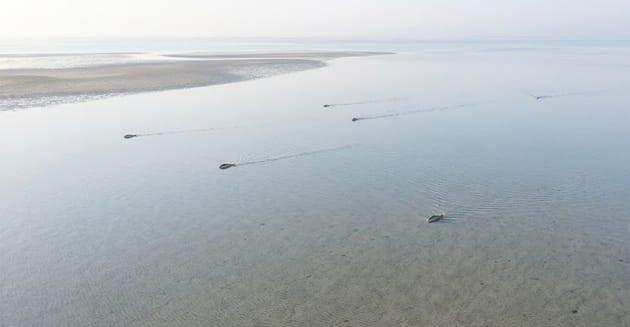
Across impacted bays, anglers are noticing:
- Redfish spreading out instead of stacking tightly on structure
- Less predictable feeding windows tied to weakened current breaks
- Increased reliance on alternative habitats like grass flats and shorelines
These changes make fish harder to pattern, especially in tournament settings where efficiency matters.
In areas where reefs have declined significantly, anglers are being forced to rethink traditional approaches—moving away from “spot fishing” and toward broader search patterns.
The Impact On Tournament Fishing Strategy
For competitive anglers, oyster reef decline is more than an inconvenience—it’s a strategic shift.
Reefs have historically provided reliable “milk runs” during tournaments. Teams could rotate through known structures, picking off fish based on tide timing. Without those dependable spots, tournaments become more dynamic—and less predictable.
That shift is already influencing how anglers prepare, particularly in regions highlighted in the top Texas bays for redfish fishing, where habitat diversity is becoming more important than ever.
Instead of relying on a handful of key reefs, successful teams are now:
- Covering more water to locate active fish
- Prioritizing areas with mixed habitat (grass, sand, scattered shell)
- Adjusting more frequently throughout the day
In short, the loss of reefs is forcing a move toward adaptive, high-effort strategies.
Regional Differences In Reef Decline
Not all Texas bays are experiencing the same level of impact. The extent of oyster reef decline varies depending on geography, freshwater inflow, and historical harvesting pressure.
| Bay System | Reef Condition | Impact On Redfish Fishing |
|---|---|---|
| Galveston Bay | Heavily impacted | More scattered fish, less predictable structure |
| Matagorda Bay | Mixed recovery zones | Still viable patterns, but shifting |
| San Antonio Bay | Moderate decline | Increasing reliance on grass flats |
| Laguna Madre | Minimal oyster presence | Naturally different fishery, less affected |
This variation means anglers must approach each region differently. What works in Matagorda may not translate to Galveston, and vice versa.
Restoration Efforts And Signs Of Recovery
Despite the challenges, there is progress being made. Restoration projects across Texas are focusing on rebuilding oyster reefs using recycled shell, artificial substrates, and controlled harvesting zones.
Organizations like Texas Parks and Wildlife, along with private conservation groups, have invested heavily in reef restoration over the past decade. In some areas, early results are encouraging—new reefs are beginning to support bait populations, and fish are returning.
However, restoration is not a quick fix. Oyster reefs take years to mature into fully functional ecosystems. In the meantime, anglers must adapt to the current reality.
The Long-Term Outlook For Texas Redfish Habitat
The future of redfish fishing in Texas is closely tied to the health of its coastal habitats. Oyster reefs are a critical piece of that puzzle, but they are only one part of a broader system that includes seagrass beds, marshes, and tidal flow patterns.
If restoration efforts continue and management improves, there is reason for optimism. Redfish populations remain strong overall, and the species’ adaptability gives it an advantage.
But the lesson from 2026 is clear: habitat matters more than ever.
For anglers, that means paying closer attention to environmental changes. For tournament organizers, it means considering how shifting habitats affect competition. And for the Texas coast as a whole, it reinforces the importance of conservation in sustaining both the fishery and the sport.
A Changing Foundation Beneath Texas Fishing
Oyster reefs have always been part of the foundation of Texas bay fishing—often unnoticed, but always essential. As that foundation shifts, so does everything built on top of it.
The decline of these reefs isn’t just an environmental headline. It’s a signal that the way we fish, compete, and understand redfish behavior is evolving.
And for those willing to adjust, it also presents an opportunity—to learn new patterns, explore new water, and stay ahead of changes that are quietly reshaping the Texas coast.