
The Sargent Trout And Redfish Tournament works because it is built around the way Texas coastal fishing actually happens: early launches, familiar bay water, local sponsors, amateur anglers, weigh-in pressure, and a community gathering point at the end of the day. The Sargent Area Chamber of Commerce lists the 17th annual S.T.A.R.T. Fishing Tournament for Saturday, June 13, 2026, on the Matagorda Bay complex, with tournament hours from 6:00 a.m. to 4:00 p.m. and weigh-in from 2:00 p.m. to 4:00 p.m. at Bayside Bar & Grill in Sargent. That format says a lot about why small coastal tournaments still matter in Texas: they are competitive, but they are also local sports infrastructure.
Why Sargent Gives The Tournament A Real Coastal Identity
Sargent is not trying to be Port Aransas, Galveston, or South Padre Island. That is part of the appeal. Its fishing identity is tied to the Matagorda Bay complex, Caney Creek access, marsh edges, shallow-water redfish, trout patterns, and the kind of local knowledge that rewards anglers who understand the area instead of chasing a generic tournament script.
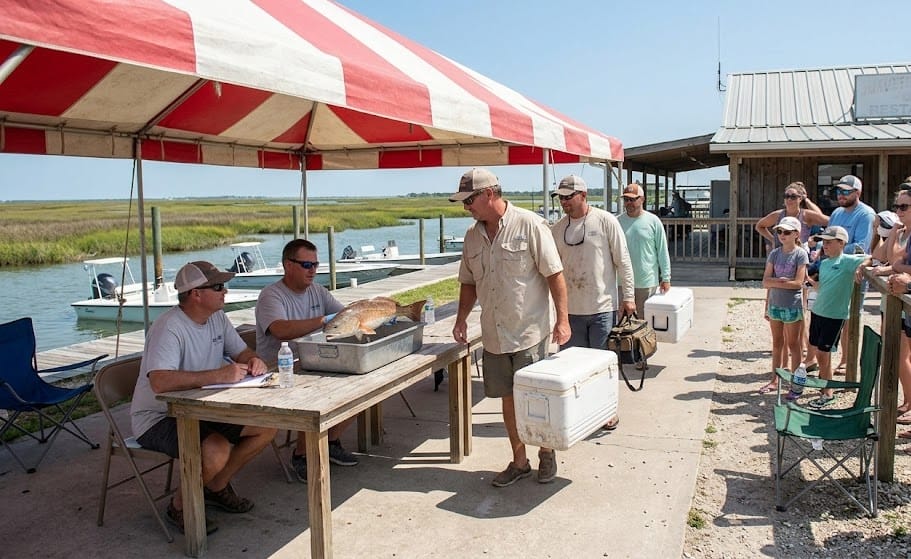
The official Sargent Trout And Redfish Tournament page describes the event as an amateur one-day tournament that brings local and visiting anglers together for redfish, trout, and heaviest stringer prizes. That local framing is important. S.T.A.R.T. is not presented as a professional circuit stop. It is a chamber-backed coastal event where anglers can wade, fish from a boat, use live or artificial bait, and compete within a defined bay system.
That makes it a useful example of how Texas coastal fishing events keep communities connected to the sport. A tournament does not need national television, elite sponsorship, or a championship trail to matter. If it gives anglers a clear date, a fair rule set, a local weigh-in site, and a reason to gather, it becomes part of the summer rhythm.
For Sargent, the event also gives the town a stronger sports identity. Visitors who might otherwise drive through or launch quietly now have a reason to stop, register, buy supplies, talk with other anglers, and spend the day around a shared fishing calendar.
How A One-Day Format Rewards Practical Angling
A one-day tournament creates a different type of pressure than a summer-long circuit. There is no long window to recover from a bad tide, a missed bite, or a weather shift. Anglers have to make decisions quickly: where to start, whether to wade, when to move, how long to stay on a school, and when to stop fishing and protect weigh-in timing.
The Sargent tournament runs from 6:00 a.m. to 4:00 p.m., with participants required to be in line with fish in hand by 4:00 p.m. The official rules say that in the event of a tie, the earlier weigh-in wins. That detail matters because it forces anglers to think about time as part of strategy. A heavier fish is valuable, but arriving late can erase the whole day.
That is one reason local events like S.T.A.R.T. feel authentic. They test the practical skills Texas anglers use every weekend. Reading wind, current, bait movement, water clarity, and pressure matters. So does knowing how long it takes to get from a productive shoreline back to Bayside Bar & Grill.
The event’s amateur-only rule also changes the competitive feel. Professional guides are not allowed, which gives local and visiting recreational anglers a clearer lane. That does not make the fishing easy. It makes the tournament more connected to the community base that supports it.
Why Trout And Redfish Keep The Event Accessible
Redfish and speckled trout are two of the most recognizable inshore targets on the Texas coast. Building a local tournament around both species keeps the event accessible while still making it competitive. Anglers do not need a large offshore boat, a long Gulf run, or specialized deep-water equipment. They need legal fish, smart bay decisions, and enough discipline to fish within the tournament rules.
S.T.A.R.T. awards prizes for redfish, trout, and heaviest stringer. The tournament’s heaviest stringer category is limited to two redfish and two trout and must include at least one of each species. That format rewards balance. An angler or team cannot simply lean on one strong redfish or one quality trout and ignore the rest of the bay.
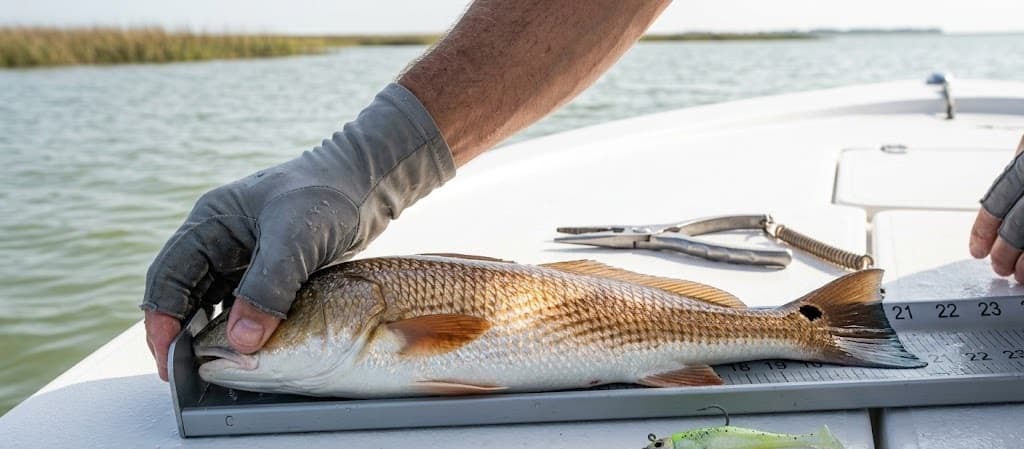
The rules also keep conservation and compliance close to the competition. Redfish entered must be within the 20-inch to 28-inch slot. Trout entered for weigh-in must be within the 15-inch to 20-inch slot. The Texas Parks and Wildlife Department’s spotted seatrout limits list a daily bag limit of three, a 15-inch minimum, and a 20-inch maximum, with special tagging rules for oversized trout. For red drum, the slot-based tournament format matches the kind of rule awareness coastal anglers need before they fish.
That structure makes the tournament easier to understand for spectators, too. A local family at the weigh-in can follow the drama without needing a complex scoring system. Bigger legal fish, a complete stringer, and clean timing carry the story.
| Tournament Detail | Why It Matters | Angler Impact |
|---|---|---|
| One-Day Schedule | Compresses decisions into one tide-and-weather window | Rewards local knowledge and efficient planning |
| Matagorda Bay Complex | Keeps the event tied to a defined coastal fishery | Prevents the tournament from feeling too scattered |
| Amateur-Only Rule | Keeps the event community-based | Gives recreational anglers a fairer competitive field |
| Trout And Redfish Format | Uses familiar Texas inshore species | Makes the event accessible to boaters and wade anglers |
| 4:00 p.m. Weigh-In Deadline | Adds time management pressure | Forces anglers to balance fishing time with return logistics |
How Bayside Bar & Grill Becomes More Than A Weigh-In Site
Every good local fishing tournament needs a gathering point. For S.T.A.R.T., Bayside Bar & Grill fills that role. The official event page lists the weigh-in there from 2:00 p.m. to 4:00 p.m., and walk-in registration is scheduled at the same location the evening before the tournament.
That matters because local tournaments are not only decided on the water. They become visible at the weigh-in. Anglers arrive with coolers, stories, missed chances, legal fish, and the usual dockside debate about tide, wind, bait, and where the bite turned on. Families and friends gather. Local businesses get traffic. The chamber has a public-facing event instead of a private fishing contest.
A weigh-in location also creates accountability. Fish are measured, rules are applied, and the weigh master’s decision is final. That is important in a tournament where slot limits, day-of-catch rules, individual entries, and no pooling between participants all shape fairness.
This is where S.T.A.R.T. shows the difference between a casual fishing meetup and a true local sports event. A casual outing ends at the boat ramp. A tournament ends in a shared public space where the community can see who performed, how the rules worked, and why the event should return the next year.
For readers following broader Texas fishing tournament growth, Sargent’s format is a useful local example. Statewide tournament growth only matters if towns like Sargent can keep events organized, fair, accessible, and meaningful for anglers who actually fish those waters.
Why Local Tournaments Support More Than Anglers
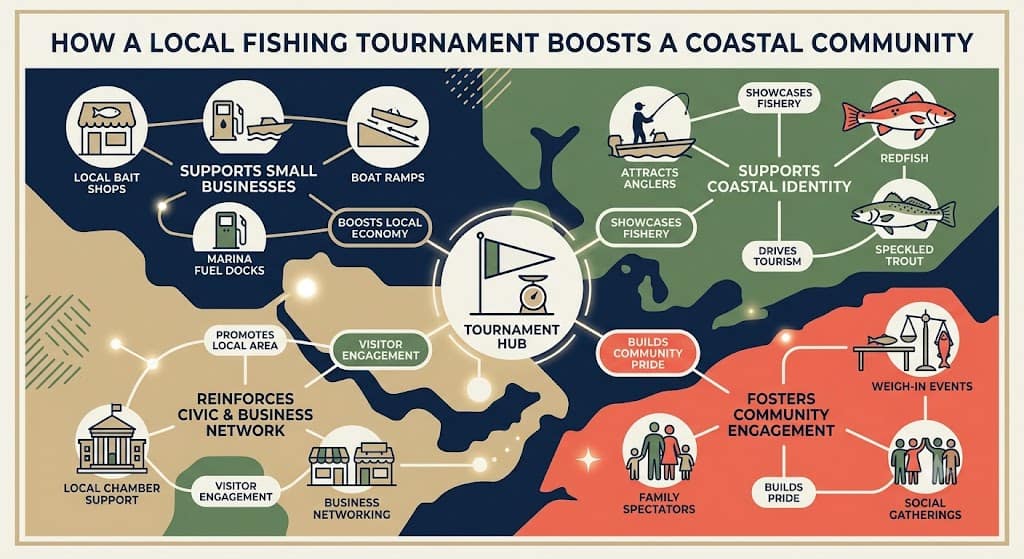
The economic value of a small coastal tournament is not measured only by prize money. The Sargent tournament charges an official entry fee of $50 per angler, with online payment listed at $52 including the processing fee. The rules page states that 50% of angler entry fees are paid back directly to anglers and 50% goes to the Sargent Area Chamber of Commerce.
That structure connects competition with local support. Anglers get prize opportunities, while the chamber gains an event that can help fund community work, sponsor visibility, and local engagement. Sponsor fees are also split between anglers and the chamber, according to the event rules, which keeps the tournament tied to both competition and community benefit.
The ripple effect can reach beyond the entry fee. Anglers may buy bait, ice, fuel, tackle, food, drinks, lodging, and supplies. Local businesses may see more weekend traffic. Sponsors get visibility in a setting that feels natural to the town’s identity. Families who attend the weigh-in help turn the tournament into a community event rather than an isolated sporting contest.
That is why local coastal tournaments matter even when they are small. They create a reason for people to organize around the water. They give local businesses a seasonal event to support. They keep the fishing calendar active between larger regional tournaments. They make coastal sports culture visible in places that might otherwise be left out of bigger tournament coverage.
How Rules Keep The Event Fair And Fish-Forward
A local tournament needs clear rules because informal competition can become messy quickly. S.T.A.R.T. handles that by defining who can fish, where they can fish, when they can weigh in, how fish must be caught, and what counts as a legal entry.
The tournament is open to the public, but no professional guides are allowed. All fishing must take place in the Matagorda Bay complex. Fish must be caught by rod and reel on the day of the tournament. Fish may not be pooled between participants. All anglers in a boat must be registered. Wade fishing is allowed. The weigh master’s decision is final.
Those rules do more than prevent disputes. They shape the competitive identity of the event. This is not a guide-driven tournament where hired expertise controls the leaderboard. It is an individual amateur tournament built around local access, legal catches, and fair measurement.
The slot-limit rules also reinforce fishery awareness. Oversized catches will not be accepted. Trout and redfish must fit the tournament’s legal requirements. State fishing laws apply. That keeps the event from rewarding anglers who ignore conservation rules for the sake of a leaderboard.
In that sense, S.T.A.R.T. works as a sports event and an angler education tool at the same time. Anyone who enters has to think about legality, timing, species, stringer composition, and weigh-in procedure. Those habits carry beyond one Saturday.
Why The Matagorda Bay Complex Makes The Competition Interesting
The Matagorda Bay complex gives the tournament a strong sporting canvas. This is not one pond, one pier, or one easily controlled stretch of water. It includes varied bay habitat, changing wind conditions, shoreline structure, grass, drains, reefs, and access points that can reward different approaches.
That variety helps explain why a trout-and-redfish format works here. Redfish may push shallow, follow bait, or respond to marsh edges and drains. Trout may relate to deeper edges, reefs, current, or water clarity. A stringer category that requires both species asks anglers to make decisions across different patterns rather than locking into one narrow tactic.
The bay system also makes weather a major factor. A one-day event can be shaped by wind direction, water color, boat pressure, tides, and how safely anglers can reach their chosen areas. That is not a flaw. It is part of the sport.
Local knowledge matters, but so does adaptability. An angler who has fished Sargent for years may know productive shorelines, but tournament day still demands real-time decisions. A visiting angler may arrive with less history but more willingness to move and adjust. That balance is what keeps local events interesting.
What Sargent Shows About The Future Of Texas Coastal Events
The Sargent Trout And Redfish Tournament shows why small coastal events still deserve attention in Texas fishing coverage. Large circuits can bring prestige, but local tournaments carry the sport at ground level. They give towns a reason to gather, anglers a reason to compete, and families a reason to connect with the coast.
S.T.A.R.T. works because it keeps the formula practical: familiar species, a defined bay system, amateur rules, a clear weigh-in site, a manageable entry fee, and community support through the Sargent Area Chamber of Commerce. That is the model many local coastal events need if they want to last.
The tournament also reflects a larger truth about Texas outdoors culture. Fishing is not only about the catch. It is about launch ramps, local sponsors, bait shops, weather windows, legal fish, family routines, and the places where anglers meet after the day ends.
That is why the Sargent event matters beyond one Saturday in June. It shows that Texas coastal fishing remains strongest when competition stays connected to community, conservation, and the local waters that give each tournament its identity.