
As winter weather transitions across the Lone Star State, the annual rhythm of largemouth bass behavior shifts decisively toward the reproductive spawn. Across legendary East Texas impoundments like Lake Fork, Sam Rayburn Reservoir, and Toledo Bend, fluctuating weather fronts and steadily warming waters trigger massive migrations of heavyweight bass into tributary pockets and shallow flats. For competitive anglers and dedicated weekenders consulting Texas bass fishing tournament guides, this annual calendar window represents the premier opportunity of the year to connect with trophy-class fish, provided they understand how hydrological shifts, water clarity, and temperature dictate fish positioning.
Decoding Water Temperature and Thermal Triggers
Water temperature functions as the primary biological clock across East and Central Texas impoundments. While early season cold fronts regularly delay shallow migrations, the progression begins when surface readings stabilize between 52 and 58 degrees Fahrenheit. During this early pre-spawn phase, mature females vacate deep winter haunts situated on main-lake river channels and suspended timber lanes, staging along secondary creek contours, primary points, and submerged ditch lines. These structural transition zones act as staging highways where fish feed heavily before committing to ultra-shallow flats.
Once localized water readings breach the 60-degree plateau and hover near 65 degrees, the primary spawn begins in protected bays and tributary pockets shielded from cold northerly winds. Official habitat surveys tracked by the Texas Parks and Wildlife Department demonstrate that water clarity, bottom composition, and sunlight penetration determine where beds are fanned. Anglers who monitor regional warming trends gain an early seasonal advantage in identifying which secondary bays activate first across a given watershed.
Three Distinct Phases: Pre-Spawn, Bedding, and Post-Spawn Dynamics
Approaching spring bass fishing effectively requires breaking the season into three distinct biological cycles, each demanding tailored boat positioning, lure cadences, and structural targets. During the pre-spawn phase, largemouth bass operate under high caloric demand to sustain egg development. They position around secondary points, inside grass lines, and channel swings. Here, aggressive moving baits that imitate gizzard shad or red crawfish trigger instinctive reaction strikes from staging fish.
The bedding phase shifts behavior entirely toward nest defense. Bass clear circular depressions down to hard sand, gravel, or firm marl bottoms, often nesting adjacent to cypress knees, submerged stump roots, or buckbrush. During this period, feeding instincts diminish in favor of territorial protection. Baits that linger inside the perimeter of the bed—such as compact soft plastics or creature baits rigged weedless—provoke defensive bites from both buck bass and giant egg-laden females.
Finally, the post-spawn transition scatters fish across divergent structural patterns. While spent females slide out to the first major contour drop or suspend in deep timber to recover, male bass remain behind in the shallows guarding newly hatched fry. Targeting fry guarders rewards precision casts with surface disturbances, while locating post-spawn females requires sweeping secondary points, offshore brush piles, and bridge pilings with deep-diving crankbaits and heavy football jigs.
| Spring Phase | Water Temperature Range | Primary Structural Targets | High-Percentage Presentations |
| Pre-Spawn | 52°F – 59°F | Secondary points, creek channel swings, outer hydrilla edges | ChatterBaits, lipless crankbaits, suspending jerkbaits, football jigs |
| Spawn (Bedding) | 60°F – 68°F | Protected coves, sandy pockets, cypress knees, shallow buckbrush | Texas-rigged creature baits, weightless stickbaits, compact tube jigs |
| Post-Spawn | 68°F – 75°F | Fry-guarding flats, primary point breaklines, offshore brush piles | Topwater poppers, walking stickbaits, Carolina rigs, deep crankbaits |
Tailoring Tactics Across Premier Texas Reservoirs
Every Texas reservoir exhibits unique structural characteristics, hydrologic profiles, and seasonal timetables during the spring migration. Sam Rayburn Reservoir, sprawling across Deep East Texas, features thousands of acres of submerged hydrilla, coontail, and vast expanses of flooded timber. In early spring, Rayburn bass stack in secondary drains inside prominent bays such as Veach Basin, Harvey Creek, and Needmore. Successful tournament bags on Rayburn frequently rely on vibrating bladed jigs ripped free from submerged vegetation and red flat-sided crankbaits run along creek channel edges.
Farther east along the Louisiana border, Toledo Bend Reservoir provides 185,000 surface acres governed by submerged river channels, expansive flats, and marked boat lanes through dense timber. Generation schedules overseen by the Sabine River Authority directly influence lake levels and water movement, determining whether bass push into shoreline willow stands or pull back to outer breaklines. High-water springs encourage bass to flood newly covered shoreline brush, where flipping heavy tungsten rigs into dense cover becomes the dominant presentation.
To the northwest, Lake Fork serves as a historic benchmark for Texas trophy bass management, preserved through intensive fisheries monitoring, dense standing timber, and dedicated slot limits. Unlike the expansive open flats of Toledo Bend, Lake Fork features sheltered creek arms such as Little Caney and Birch Creek that warm quickly under spring sunshine. Pressured bass in Fork’s clear water demand stealth, natural baitfish hues, and methodical presentations along isolated stumps where shallow flats meet primary creek ledges.
Lure Selection and Rigging for Spawning Patterns
Refining terminal tackle and bait selection separates occasional bites from consistent tournament limits during spring weather volatility. When fish actively stage during pre-spawn movements, moving lures allow anglers to cover expansive territory and locate staging schools before slowing down with bottom contact.
- Vibrating Jigs and Lipless Crankbaits: Ideal for searching grass flats in 3 to 7 feet of water. Ripping a 1/2-ounce bladed jig off hydrilla stalks triggers reaction bites from cruising pre-spawn fish.
- Texas-Rigged Creature Baits: The standard presentation for bedding pockets. Pegged 3/8-ounce or 1/2-ounce tungsten weights keep soft plastics upright inside bed perimeters, frustrating bed-guarding bass into striking.
- Weightless and Wacky-Rigged Stickbaits: Lethal in high-visibility water and sheltered pockets. A slow, horizontal fall along dock pilings or submerged wood coaxes strikes from wary staging bass.
- Suspending Jerkbaits: Proven producers along secondary points and channel swings during early season cold snaps. Long pauses of five to ten seconds suspend the bait directly in the strike zone of sluggish pre-spawn bass.
Matching line choices to cover density remains vital. In heavy timber and abrasive hydrilla, 50- to 65-pound braided line paired with heavy-power fast-action rods delivers the leverage required to extract trophy bass, whereas clear flats dictate 15- to 17-pound fluorocarbon lines to maximize natural lure movement.
Managing Spring Cold Fronts and Rapid Pressure Fluctuations
Spring conditions across Texas are famous for sharp volatility, where unseasonably warm afternoons give way to bluebird skies, howling north winds, and rapid barometric spikes. Following a late-season cold front, largemouth bass rarely abandon their spawning embayments entirely; instead, they retreat into the nearest dense cover available within the immediate cove. Bass that roamed a 3-foot flat during warm afternoons pull tight into brush piles, bury deep inside weed mats, or position beneath boat docks.
Adapting to post-frontal conditions demands downsizing presentations and slowing retrieve speeds to an absolute crawl. Dragging Carolina rigs along secondary drop-offs, working finesse drop-shot rigs around timber, or dead-sticking soft plastics on the bottom yields strikes when fish refuse moving baits. Monitoring localized water temperature shifts—which can drop five degrees in shallow pockets within hours—ensures anglers focus time on protected coves with stable water temperatures.
Stewardship and Responsible Handling During the Spawn
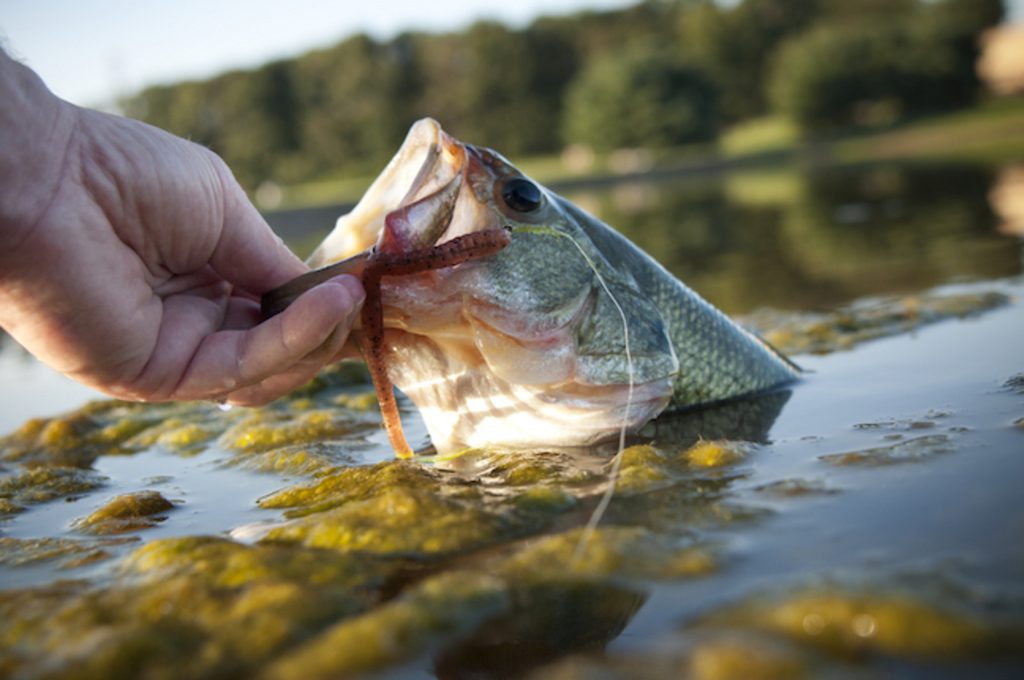
Targeting trophy largemouth bass during their reproductive cycle requires conscious stewardship to safeguard future Texas fisheries. Spawning represents the biological foundation of reservoir fish populations, and careful handling directly influences reproductive success. When landing heavy pre-spawn or spawning females, anglers should minimize handling time, keep livewells well-aerated, and support large fish horizontally using two hands to prevent structural damage to the jaw and spinal column.
Texas anglers contribute directly to state conservation goals through initiatives like the Toyota ShareLunker Program, which collects genetic data and loans qualifying 13-pound bass for selective hatchery breeding. Releasing bedding bass promptly near the location of capture allows parent fish to resume nest defense before bluegill and sunfish can prey upon exposed eggs. Practicing disciplined fish care ensures Texas reservoirs continue providing world-class bass fishing opportunities for generations to come.