
When powerful Arctic cold fronts sweep down across the Texas coastal bend, the shallow saltwater ecosystems undergo an immediate transformation. Water levels drain out of the primary flats under stiff northerly winds, ambient temperatures plummet by thirty degrees in a matter of hours, and gin-clear water replaces the brackish summer haze. For competitive redfish tournament anglers and dedicated coastal sports enthusiasts, this seasonal shift marks the arrival of the most predictable feeding patterns of the year.
While casual boaters often winterize their rigs when November rolls toward December, serious inshore competitors know that colder water consolidates redfish into predictable staging zones. Understanding the thermodynamic shifts between shallow muddy back-bays, submerged seagrass beds, and deep channel guts separates consistently successful tournament teams from those struggling to find five legal bites. Success in low-temperature conditions requires dialing in seasonal tides, adjusting presentation speeds, and interpreting localized weather systems.
Thermodynamics and Winter Redfish Movements
Red drum (Sciaenops ocellatus) are cold-blooded predators whose metabolic rates mirror water temperatures. As detailed in coastal fisheries assessments from the Texas Parks and Wildlife Department, sudden temperature plunges below 50 degrees Fahrenheit force redfish out of shallow marsh nurseries into stabilized thermal refuges. Navigational channels, petroleum pipeline guts, port basins, and deep holes in bays like Aransas, Corpus Christi, and West Matagorda Bay retain heat much longer than 12-inch flats.
During the immediate post-front aftermath, when barometer readings soar and northerly gales blow coastal waters into the Gulf, redfish stack tightly along the bottom contours of these deep conduits. They pack close to structure, minimizing energy expenditure while waiting for atmospheric stabilization. Anglers who locate these thermal sanctuaries during the first 24 to 36 hours of a blue norther can experience fast-paced vertical action on soft plastics and vibrating metal blade baits.
However, the true mastery of winter inshore fishing appears during the warm-up cycle. Forty-eight hours after a front passes, the wind calms, pivots toward the southeast, and the Texas sun warms shallow mud flats and oyster reefs. Because dark mud and exposed shell absorb solar radiation much faster than deep water, adjacent shallow flats can rise three to six degrees above surrounding channel temperatures by mid-afternoon. Redfish recognize this immediate thermodynamic advantage and push onto shallow flats to feed on sluggish crabs, mantis shrimp, and mud minnows.
Adapting Presentations for Cold-Water Lethargy
The fast-paced topwater explosions of September and October give way to subtle, calculated strikes during winter tournaments. When coastal water temperatures drop below 58 degrees, a redfish’s strike zone narrows from several feet down to a few inches. Aggressive retrieves that produce vicious reaction bites during warmer months will regularly go untouched or spook skittish schools cruising in ultra-clear water.
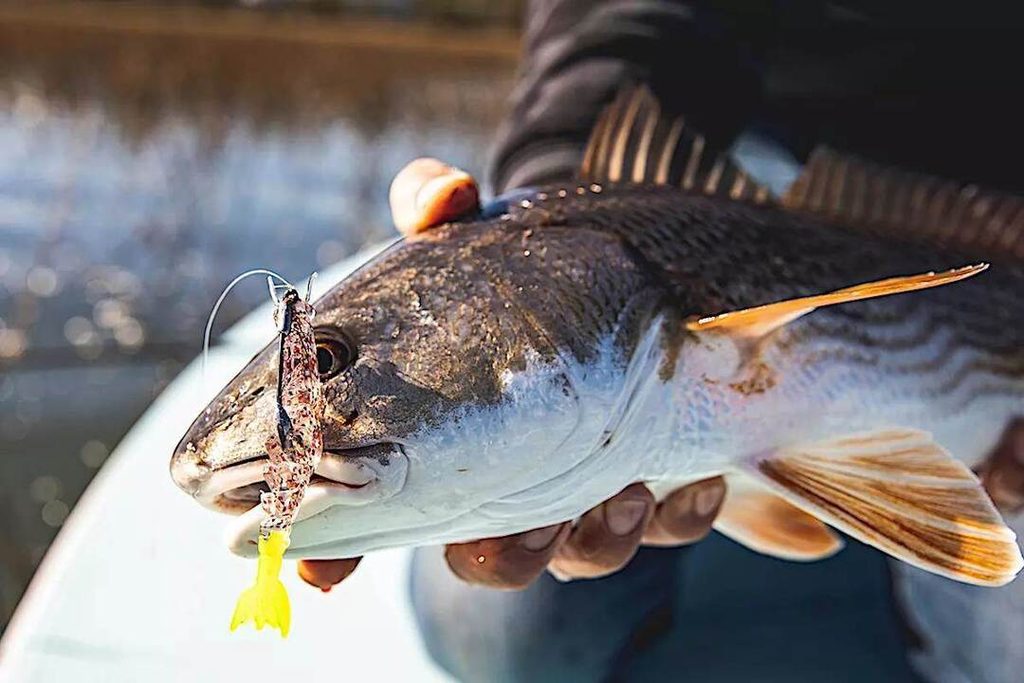
Downsizing lure profiles and slowing retrieve tempos are critical tactical adjustments. High-salinity winter flats demand natural hues—bone, olive, clear metal flake, and copper—paired with lightweight 1/16-ounce or 1/8-ounce screw-lock jigheads. Lighter heads prevent lures from burying into delicate shoal grass and turtle grass while extending glide time during the fall. Scented soft plastics, especially shrimp and paddle-tail profiles infused with amino acids, provide the extra second needed for an angler to detect a winter take, which often feels like nothing more than gentle spongy resistance.
| Frontal Phase | Primary Habitat Target | Effective Depth | Recommended Presentations |
| Pre-Front (Falling Barometer) | Windward flat edges & reef points | 2 to 4 feet | Suspending twitchbaits, high-cadence spoons |
| Immediate Post-Front (Gale Winds) | Channel edges, dredging holes & ICW guts | 6 to 15 feet | 1/4-oz jig with scented paddle tail, blade baits |
| Day 2 Calm (High Barometer) | Drop-offs adjacent to flats & shell pads | 3 to 6 feet | Dead-sticked soft plastics, slowly crawled jigs |
| Day 3 Post-Front (Warming Sun) | Dark mud bottoms & shallow grass flats | 10 to 24 inches | Unweighted soft jerkbaits, sight-casting crabs |
Navigating Extreme Low Winter Tides
Strong sustained northwest winds regularly induce meteorological blow-out tides along the Texas coast, dropping water tables twelve to twenty-four inches below mean lower low water (MLLW). Real-time coastal water levels tracked by the NOAA Tides and Currents network frequently reveal negative tides that leave expansive back-lakes completely dry. Navigating these conditions demands exceptional boat handling, specialized hull design, and hyper-accurate tidal awareness.
Running tunnel-hull shallow-draft flats skiffs or catamarans allows guides and tournament pros to traverse skinny waters, but getting stuck on an isolated shell reef during an outgoing winter tide can leave a vessel stranded until the wind shifts. Experienced competitors establish primary and secondary ditch access routes before morning blast-off. They know that when the tide empties a sprawling marsh complex, every fish that inhabited that nursery must funnel through narrow drain mouths, creating concentrated ambush zones where redfish congregate in remarkable densities.
Setting up drift patterns or quietly utilizing shallow-water anchor poles upwind of these tidal drains lets anglers cast back toward current seams. Floating weedless spoons or bumping slow-rolled paddle tails across drain lips delivers high-percentage bites as redfish lie in ambush for disoriented crustaceans swept along by the falling current.
Tournament Execution and Livewell Care
Competing in winter redfish events requires rigorous attention to livewell management and fish preservation. Texas inshore redfish tournament series enforce strict live-release penalties, meaning keeping slot-sized redfish (20 to 28 inches) lively and vigorous throughout a long tournament day directly dictates leaderboard standings. While cooler water inherently holds higher dissolved oxygen levels than summer water, extreme temperature shifts and rough navigation introduce distinct physiological risks.
- Livewell Temperature Monitoring: Pumping frigid, hyper-saline surface water continuously during freezing mornings can subject fish to thermal shock. Run aeration systems on recirculation intervals once baseline water is established.
- Managing Barotrauma from Deep Channels: Redfish pulled from dredging holes or 15-foot cuts frequently experience swim bladder expansion. Anglers must carry venting tools or weighted descent clips to alleviate pressure before placing fish in the box.
- Preventing Rough-Ride Trauma: Winter chop across open bays like Galveston or San Antonio Bay can cause severe physical trauma to fish in livewells. Installing livewell baffles and oxygen infusers prevents exhaustion and bruising during long runs back to weigh-in.
Precision culling also demands careful length verification. In colder conditions, redfish muscle tissue tightens and contracts slightly on ice or in cold wells, which can cost an angler a fraction of an inch on official tournament check boards. Tournament anglers constantly check their qualifying fish on certified bump boards to ensure every retained slot fish remains securely within legal parameters.
Preserving Texas Estuaries and Inshore Communities
The exceptional winter redfish fishery enjoyed today reflects decades of disciplined coastal conservation, commercial gill-net bans, and progressive gamefish status protections. As documented in ongoing coastal reports on the Fall Redfish Run across Texas bay systems, maintaining healthy estuaries hinges on proactive habitat preservation, responsible harvest ethics, and collaborative stewardship among private anglers, tournament directors, and state regulatory bodies.
Winter presents heightened vulnerabilities for gamefish populations, as sub-freezing events can trigger dangerous fish kills if deep thermal refuges are disrupted or overpressured. Practicing catch-and-release when fish are tightly school-locked in deep channels protects broodstock and future slot classes. By respecting environmental thresholds, refining tactical approaches, and staying informed through dedicated local sporting organizations, Texas anglers ensure that the thrill of winter sight-casting across our coastal flats remains world-class for generations to come.