
Forget what you think a nature fair is like. This isn’t a place with old stuffed animals and unread brochures.
Imagine a mix of a big museum exhibit and a trade show for nature lovers. Add a meeting where people in camouflage meet those in outdoor sandals. That’s what the Texas Parks and Wildlife Expo is like.
Starting in 1992, it was a way to thank hunters. Now, it’s a huge event for two days, reaching over half a million people every year.
This event is not just about listening to talks. It’s a hands-on learning experience. It aims to teach people the basics of caring for nature.
It’s more than just learning about wildlife conservation Texas style. It’s about feeling it. You’ll smell fried fish, see shiny fishing rods, and feel the outdoors. This is where love for nature meets action.
Conservation Organization Exhibits
The Conservation Organization Exhibits hall is like a political rally. Here, animals like black bears and deer campaign for your support. The Texas Parks and Wildlife Department is running for re-election, asking for your vote.
The department is not just hosting this event—it’s the main stage. Their exhibit shows the whole process of wildlife management. You can see duck stamp artwork, touch animal pelts, and learn how your fishing license helps.
This is a masterclass in soft-power governance. The expo is TPWD’s open house, showing its mission to skeptical audiences. It makes the bureaucracy seem personable.
Different groups use different strategies on this floor. The table below shows how four major exhibit types tailor their messages to win support.
| Exhibit Type | Primary Audience Target | Engagement Method | Key Message |
|---|---|---|---|
| TPWD Main Booth | General Public & Urban Families | Tactile Displays, Live Demos | “Your Fees Fund This Work” |
| Non-Profit Conservation | Donors & Policy Advocates | Data Visualization, Membership Drives | “Specific Species Need Your Help” |
| Outdoor Gear Company | Active Hunters & Anglers | Product Testing, Expert Talks | “Better Gear Enhances Your Ethic” |
| Youth Education Station | Children & Students | Interactive hunting education games, Pelts & Skulls | “Conservation Starts With You” |
This model works because it uses trade show logic. Instead of selling products, booths promote stewardship. It’s about building goodwill and political capital.
This approach is so effective, it’s been adopted by others. The Weatherby Foundation helps states copy this Texas model. They know making wildlife management visible is key to building a strong conservation coalition.
These exhibits succeed by making complex policy feel like entertainment. They turn citizens into engaged stakeholders, one touched pelt at a time.
Wildlife Management Seminars
Forget the dry PowerPoint. At these sessions, a lesson on raptor ecology might involve a hawk landing on your neighbor’s glove.
This is where the expo shifts gears. It moves from show-and-tell to a kind of Socratic seminar with feathers and talons. Experts like falconer Jonathan Wood don’t just talk about birds of prey; they bring them. The lecture on habitat and hunting instinct happens with a live demonstration, the visceral thrill of the moment making the science unforgettable.
Coastal biologist Justin LeClaire might dissect shorebird survival with the urgency of a detective solving a crime. It’s biology served as narrative, turning complex data into a compelling story.
These seminars are the intellectual engine of the entire outdoor education expo. They answer the “why” behind every “what” you see on the floor. Why are hunting seasons structured a specific way? What’s the real domino effect of a new condo complex on local coyote populations?
It’s continuing education for the environmentally curious. But the classroom is buzzing with energy, surrounded by vendors and the hum of a thousand conversations. This is where theory meets the glove, and dialogue takes flight.
Hunter Education Programs
The Texas Wildlife Expo started in 1992 as a big thank you to hunters. They were the first to support wildlife conservation Texas style, using their fees and taxes on hunting gear. It was a clever way to kick off the event.
Today, the Expo is huge, and at its core is hunter education. But don’t think it’s just about teaching people to hunt. It’s about so much more.
The programs aim to clear up any misconceptions. They teach the importance of safety and ethics in hunting. You’ll learn from experienced mentors who show you the ropes, from sighting a rifle to understanding animal habitats.
This connection between hunting and conservation is unique. Buying a hunting license is more than a fee. It’s an investment in the environment. The tax on your gear goes towards protecting habitats and building water sources.
So, what’s the difference between a regular hunter ed course and the Expo? It’s all about the experience.
| Aspect | Traditional Hunter Education Course | Expo-Based Hunter Education Experience |
|---|---|---|
| Primary Focus | Certification & Legal Compliance | Immersion & Contextual Understanding |
| Learning Environment | Classroom or Online Modules | Interactive, Festival-Style Atmosphere |
| Mentor Access | Typically the Course Instructor | Multiple Experts, Biologists, & Seasoned Hunters |
| Connection to Conservation | Explained Conceptually | Visibly Demonstrated through Adjacent Exhibits & Projects |
| Perception of the License Fee | Often seen as a regulatory cost | Framed as a direct conservation investment |
The table shows the Expo’s unique approach. It connects the dots from hunting to conservation. You learn about the turkey you’re hunting in the same place you learn about its habitat.
This approach changes how we see hunting. It shows hunters as guardians of nature, not enemies. The Expo makes this clear, one conversation at a time.
Youth Conservation Activities
Forget the ball pits and video games—the real magic at the Texas Wildlife Expo happens in what might be the world’s most educational playground. This isn’t childcare. It’s a carefully engineered gateway drug to conservation.
The kids’ zone swaps plastic slides for casting ponds. It trades joysticks for pellet gun ranges. Touch tanks replace tablet screens with actual aquatic critters. Here, hunting education gets repackaged as pure adventure.
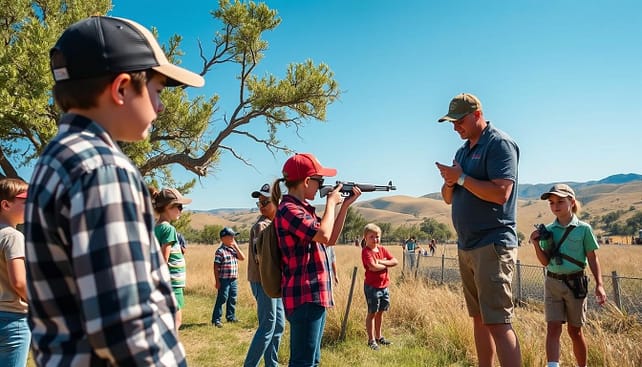
Watch a seven-year-old’s concentration as they line up a shot at a paper target. See the triumph when they “catch” a bluegill in the stocked tank. That moment of connection is more valuable than any textbook diagram.
The expo provides hundreds of these hands-on activities for a reason. They’re targeting what experts call “non-traditional customers.” Translation: families who might never visit a wildlife management area on their own.
Social support becomes the secret sauce. Parents aren’t just spectators. They’re coaches at the casting pond. They’re fellow explorers at the touch tank. This shared experience dissolves the usual parent-child dynamic.
The goal isn’t to create junior biologists by age ten. It’s to spark a specific kind of wonder. The kind that makes a kid beg to go fishing next weekend. The kind that turns a casual visit into a lifelong interest.
This hands-on hunting education creates something textbooks cannot: emotional memory. A child remembers the feel of a fishing rod. The smell of the pond. The sound of their parent’s encouragement.
That child becomes a future voter. A possible donor. An advocate for conservation policies. The expo isn’t just entertaining kids today. It’s recruiting for tomorrow’s cause.
| Aspect | Traditional Education | Expo Approach | Outcome |
|---|---|---|---|
| Method | Classroom lectures, textbooks | Hands-on activities, direct interaction | Higher retention through experience |
| Engagement | Passive learning | Active participation | Creates emotional connection |
| Social Context | Individual or peer-focused | Family-oriented, intergenerational | Builds shared values and support |
| Skill Development | Theoretical knowledge | Practical skills (casting, safety) | Builds confidence and capability |
| Conservation Message | Abstract concepts | Tangible, immediate experiences | Fosters personal responsibility |
Think of it as an inoculation. Not against disease, but against nature-deficit disorder. The expo gives urban and suburban kids what they’re missing: dirt under their nails and fish scales on their hands.
The pellet gun range teaches more than marksmanship. It instills respect for firearms. The casting pond teaches patience. The touch tank teaches curiosity about ecosystems.
Each activity is a puzzle piece. Together, they form a complete picture of responsible outdoor citizenship. The expo makes that picture fun to assemble.
Families leave with more than free stickers. They leave with shared memories. They leave with a new framework for understanding their natural world. Most importantly, they leave wanting to come back.
That’s the real metric of success. Not attendance numbers. Not educational standards met. But the number of kids who drag their parents back to the car, already planning their next outdoor adventure.
Native Species Information
A great outdoor education expo turns you from a passive viewer into an active detective of local biodiversity. It’s like going from watching a nature documentary to learning the name of that weird, hopping rodent you saw near the dunes last weekend. This isn’t just general wildlife appreciation—it’s a hyper-local “Who’s Who” for your ecosystem.
Think of it this way: anyone can get excited about a tiger. But can you identify the Gulf Coast kangaroo rat and explain why its existence is a minor miracle? That’s the level of detail a proper outdoor education expo provides. It answers the question you’re too embarrassed to ask aloud: “What exactly is living out there, and why should I care?”
The South Padre Island expo’s photo contest is a perfect example. The categories aren’t just “animals.” They’re “wild birds” and “coastal animals.” This subtle framing forces participants to look closer, to seek out the specific characters in their regional ecological drama. Judges reportedly prioritize images of rarer species, effectively creating a crowdsourced field guide to local rarity.
This transforms the experience. You’re no longer just learning; you’re documenting. The information ceases to be a dry list in a pamphlet. It becomes a narrative about your wild neighbors—who’s thriving, who’s struggling, and who’s that reclusive cousin nobody sees anymore.
So, what kind of native species intel can you expect at a well-curated outdoor education expo? It typically breaks down into a few key areas, moving from the familiar to the fascinatingly obscure.
| Information Type | Common Examples | Rare/Notable Finds | Why It Matters |
|---|---|---|---|
| Bird Life | Northern Mockingbird, Great Blue Heron | Piping Plover, Reddish Egret | Indicator species for coastal health; migration patterns reflect climate shifts. |
| Coastal & Dune Dwellers | Ghost Crabs, Sea Oats | Gulf Coast Kangaroo Rat, Sea Turtles | Specialized adaptations for harsh environments; extremely limited habitats. |
| Often Overlooked | Local insects, common shrubs | Native pollinators, keystone plant species | Foundation of the food web; their decline collapses everything above them. |
| Conservation Status | Species of Least Concern | Threatened, Endangered, or Candidate Species | Directly ties local sightings to global conservation efforts and policy. |
The table above isn’t just academic. It’s the blueprint for how a serious outdoor education expo structures its messaging. It starts with what you might know, then introduces you to what you should know. The “Why It Matters” column is the secret sauce—it provides the stakes.
Learning that the Piping Plover is a rare shorebird is one thing. Understanding that its nesting grounds are being swallowed by rising seas and human development? That’s a story. That’s context. It transforms a bird into a symbol, a tiny, feathered canary in the coastal coal mine.
This approach fights the generic “nature is good” mantra with cold, hard, local facts. It replaces vague sentiment with specific responsibility. After an expo like this, you don’t just like animals. You’re worried about that particular plover on that particular beach. That’s how education becomes advocacy.
Ultimately, the best native species information at an outdoor education expo does more than fill your head with names. It rewires your perception. The landscape outside your window stops being a green blur. It becomes a community with residents, each with a role, a story, and a precarious place in the plot. You leave not just informed, but enlisted.
Habitat Restoration Projects
Forget the PowerPoint presentations – the real story of wildlife conservation Texas is in the dirt, water, and birds. Conference halls have their place, but the real learning happens when you step off the bus. Your boots sink into the restored wetland mud.
The SPIBNCAS expo gets this. They don’t just talk about coastal preservation. They take you out to see it for yourself. You don’t just hear about acres restored; you stand on them.
Take the Bahia Grande project. It’s a huge wetland restoration on the Texas coast. Once a dry dust bowl, it’s now a thriving estuary. You can smell the brackish water, hear the marsh birds, and see the change.
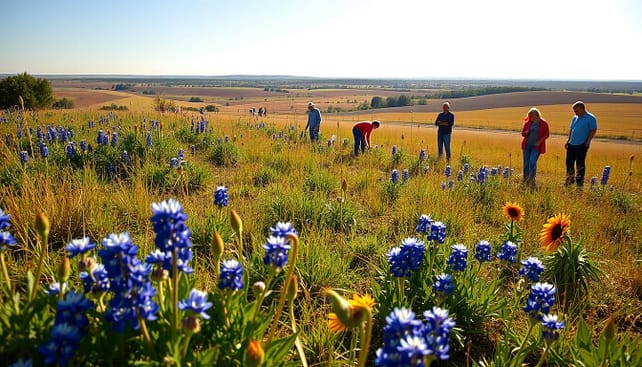
Then there’s “Wine & Wetlands.” Only in Texas would they pair ecological appreciation with wine tasting. This tour turns abstract “project updates” into a real experience. You’re not just learning about habitat management; you’re experiencing it with all your senses.
The Steve Thompson Wildlife Drive offers another view. Here, managed habitats show how careful work supports biodiversity. You see how restoration helps species survive. It’s conservation made real.
These tours do what brochures can’t. They create emotional investment through direct experience. Watching shorebirds return to a restored marsh makes conservation personal. It becomes a story of stewardship you’ve walked through.
| Project Name | Region | Primary Habitat Type | Key Restoration Action | Notable Species Impact |
|---|---|---|---|---|
| Bahia Grande | Lower Laguna Madre | Coastal Wetland | Estuary Rehydration | Reddish Egret, Black Skimmer |
| Texas Prairie Wetlands | Gulf Coast Prairie | Freshwater Marsh | Water Control Structures | Mottled Duck, Blue-winged Teal |
| Pease River Shinnery | Rolling Plains | Shinnery Oak Prairie | Prescribed Burning | Lesser Prairie-Chicken |
| Edwards Aquifer | Hill Country | Spring-fed Ecosystem | Water Quality Protection | Fountain Darter, Texas Blind Salamander |
| Matagorda Bay | Mid-Coast | Seagrass Meadow | Propagule Planting | Sea Turtle, Red Drum |
What makes these experiences so powerful? They show you what successful conservation looks like. Not as numbers in a report, but as thriving ecosystems you can visit. The Texas prairie wetlands project shows similar success – turning bad landscapes into good ones through careful work.
The genius of these expo tours is their storytelling. They don’t just list off restoration steps. They tell a story of heroes, challenges, and victories. You become part of that story just by seeing it.
This approach marks a big step forward in wildlife conservation Texas education. We’ve moved from “look at these pictures” to “see what we’ve done.” The dirt under your feet is the best proof of the need for more habitat restoration. Seeing, smelling, and hearing it makes you believe.
Photography Workshops
Imagine the ultimate trophy is an image that defends an entire ecosystem. That’s the idea behind the Expo’s photography workshops. It’s hunting education for today, using cameras instead of guns. It teaches patience, stealth, and respect for nature.
Using a camera is like mastering a new tool. You learn to read light and understand animal behavior. This way, you capture life’s essence without harming it. It’s a quiet, respectful way to improve your observation skills.
The SPIBNCAS Photo Contest is a big deal. It’s not just for fun. It’s a serious way to document nature. The rules are interesting:
- Geography is Destiny: Photos must be from a special area from South Padre Island to Laguna Atascosa. You must engage with this place now.
- The Clock is Ticking: Photos must be taken after January 1, 2024. It’s about capturing today’s world, not yesterday’s.
- No Watermarks Allowed for Judging: This rule helps images stand on their own. It focuses on their artistic and educational value.
The Expo’s gallery is more than pretty pictures. It’s a collection of Texas’s biodiversity. Each photo tells a story and argues for nature’s protection. This hunting education teaches you to see and understand nature. The perfect shot is a guardian of the wild.
Volunteer Opportunities
The brochures are folded. The seminars are done. You leave the outdoor education expo with a lot to think about. Then Monday comes, and you wonder what to do next.
The Texas Wildlife Expo has a smart solution. It doesn’t just talk about saving nature; it gets people involved. The event relies on volunteers to make it happen. They help plan, run booths, and more.
This approach strengthens the community. It’s not just about the event. It’s about the work that follows. Want to help with dune grasses on Padre Island? They’ll connect you. Ready to build bat houses in the Hill Country? They have the plans and the need.
This is the expo’s genius. It’s the spark that ignites the flame. The volunteers keep that fire burning. It doesn’t just end in the parking lot. It fuels local projects and events across Texas, turning dreams into reality.
It answers the question every attendee wonders. “Okay, I’m convinced. Where are the gloves?” The expo gives you the tools you need.