
The Texas B.A.S.S. Nation Youth Fundraiser is not a side item for student anglers planning a full tournament run. As of October 5, 2026, the 2026-2027 Youth Tournament season had already opened, and each region’s Stop #1 had served as both the start of competition and the launch point for the mandatory fundraising requirement.
What Changed After The September Launch
Stop #1 Was More Than A Tournament Date
Texas B.A.S.S. Nation Youth opened its 2026-2027 season in September 2026. The official regional launch dates were September 19, 2026, for the Central and Northwest regions and September 26, 2026, for the Northeast and Southeast regions, according to the Texas B.A.S.S. Nation Youth articles. That matters because those dates started more than a schedule. They also opened the mandatory fundraising window tied to later championship eligibility.
For families who missed the first regional stop, the planning question is no longer whether the fundraiser will begin. It already began. The task now is to confirm the angler’s fundraiser status, check whether the required account steps were completed, and make sure the family understands how participation or the Buy Out option affects championship access.
That timing changes how teams should talk about preparation. Rods, tackle, practice plans, boat partners, and travel still matter, but tournament planning now also includes fundraiser compliance. A strong finish on the water can lose value if a team has not handled the off-water requirements that Texas B.A.S.S. Nation Youth has tied to postseason eligibility.
What Families Should Verify First
The first checkpoint is simple: did the angler either participate in the required fundraiser process or complete the Buy Out option? The official research notes state that anglers who do neither are ineligible for the 2027 Regional or State Championships. That is a hard planning point for any family aiming beyond regular-season events.
Families should also confirm whether the angler’s Raise 365 account was set up, whether a parent or guardian was connected, whether the angler joined the fundraiser using the correct regional code, and whether the required eligible contacts were added. These are administrative steps, but they carry competitive weight because they sit between regular-season effort and championship opportunity.
Youth Fundraiser Planning Starts With Eligibility
Youth Fundraiser Actions That Count
For the Youth Fundraiser, participation is based on outreach to at least 25 eligible contacts. The research notes state that there is no minimum dollar amount required per angler. That detail is worth separating from the pressure families often feel around fundraising. The requirement is tied to participation and awareness, not a specific personal fundraising total.
The Buy Out option exists for anglers who choose not to actively fundraise. The research notes state that the Buy Out link opened September 1 before the season began. Since that date has passed, families should treat the Buy Out as an item to verify through current Texas B.A.S.S. Nation Youth channels rather than as a future step.
This format places responsibility on every tournament family, but it also gives families two clear routes. An angler can participate in the outreach process, or the family can use the Buy Out option. What the rules do not leave open is doing neither and still expecting a clean path to Regional or State Championship competition.
Membership, Grade, And Team Basics
The research notes list the fundamental eligibility requirements for Texas B.A.S.S. Nation Youth participation. Anglers must be in grades 2 through 12, must not turn 19 before September 1 of their senior year, and must be current members of B.A.S.S., B.A.S.S. Nation, and Texas B.A.S.S. Nation. Membership dues must be paid.
Anglers also must follow local and state laws and regulations, possess a valid fishing license, and fish on teams from the same school or community. Those details may sound routine, but they shape the tournament field. A team cannot treat eligibility as paperwork to sort out after the catch. In youth bass fishing, the administrative side and the competitive side move together.
The research notes provided for tournament qualification include rules documents labeled for the 2025-26 season. Families should confirm the current season packet before acting on any edge case, especially if a school/community pairing, grade status, membership timing, or licensing question is unusual.
Championship Path And Fundraiser Duties
High School Division Qualification
For the High School Division, the research notes state that teams qualify for a Regional Championship by either winning one of the qualifying events or finishing in the top 65 percent or among the top 50 boats, whichever is greater, while also fishing at least three events in their region. That creates a two-part challenge: performance and participation volume.
The performance path rewards anglers who can stay consistent across changing water, weather, boat traffic, and tournament pressure. The participation requirement rewards teams that commit to a regional schedule rather than treating the season as a one-off. Both parts matter. A big day can help, but the three-event requirement keeps the season structure meaningful.
To move from a Regional Championship to the State Championship, the research notes state that a High School Division team must finish in the top 65 percent or among the top 30 boats in its Regional Championship, whichever is greater. That is where ignoring the Youth Fundraiser requirement can become costly. A team can handle the on-water side and still face an eligibility problem if the mandatory off-water requirement was skipped.
Junior Division Path
The Junior Division path is different. The research notes state that all Juniors who fish at least three regional events qualify for their Regional Championship. For State Championship movement, all Juniors who fish three events and compete in the Regional Championship qualify.
That structure gives younger anglers a clear development pathway. It rewards showing up, learning tournament rhythm, and building confidence through repeated competition. For parents, boat captains, and local clubs, it also gives a direct way to teach schedule discipline and rule awareness early.
Texas families tracking dates across the youth trail may also find our related coverage of the September Texas B.A.S.S. youth calendar useful for understanding how the season opened across regions.
Community Support Behind The Tournament Trail
Why The Fundraising Requirement Matters Locally
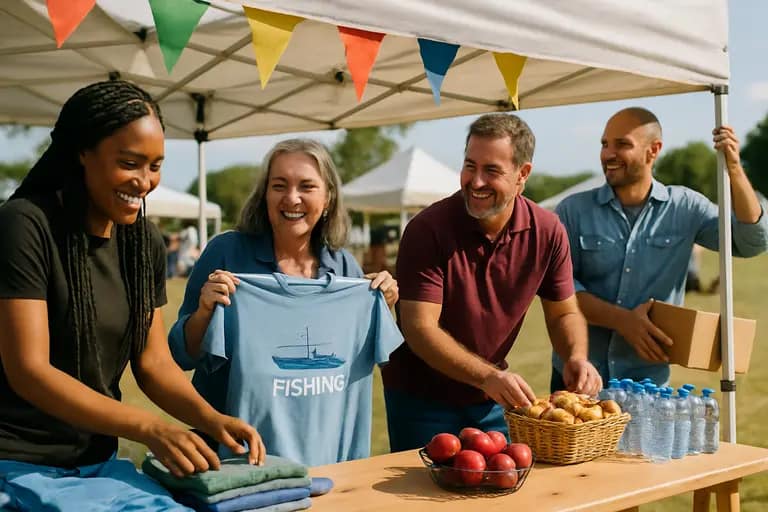
Texas B.A.S.S. Nation Youth states in the research notes that proceeds from entry fees, sponsorships, memberships, and donations are used to operate tournaments and provide cash prizes and scholarships for student anglers. That is the community angle behind the requirement. These events do not run on boat ramps and weigh-in bags alone. They require administration, volunteers, awards, tournament operations, and support from families and sponsors.
The fundraiser also gives student anglers a reason to explain what they are doing to people outside the boat. A young angler who shares the program with relatives, teachers, neighbors, local business owners, or family friends is not just asking for help. That angler is learning how a tournament trail depends on community support.
For parents and captains, that is a useful teaching point. Competitive fishing asks students to manage preparation, decision-making, patience, and sportsmanship. The fundraising piece adds communication and accountability. Those are not casting skills, but they matter in a youth sports program built around long weekends, travel, early mornings, and shared responsibility.
Planning Across Sports Calendars
Many families involved in student fishing also juggle football, volleyball, baseball, livestock shows, church events, school trips, and local fundraisers. A missed contact deadline or unfinished account setup can happen fast when family calendars stack up. That is why the safest approach is to treat fundraiser status the same way teams treat boat numbers, life jackets, licenses, and tournament entry confirmation.
Families who follow youth and community sports beyond fishing can find related sports coverage through baseball coverage in the same network. This connection highlights the common challenges youth sports families face as they navigate between fields, gyms, ramps, and lakes, emphasizing the importance of planning across various sports.
- Confirm the angler’s region and Stop #1 launch date.
- Check whether the Raise 365 account and parent or guardian connection are complete.
- Verify that the correct regional fundraiser code was used.
- Make sure at least 25 eligible contacts were added if fundraising participation is the chosen path.
- Confirm Buy Out status if the family chose not to actively fundraise.
- Keep membership, dues, license, grade, and team-community requirements organized before championship deadlines.
Youth Fundraiser Takeaways For Texas Teams
The main takeaway is that the Texas B.A.S.S. Nation Youth requirement is already active for the 2026-2027 season. Central and Northwest launched on September 19, 2026, and Northeast and Southeast launched on September 26, 2026. Any family planning for 2027 Regional or State Championship eligibility should treat fundraiser status as a current-season checkpoint, not a late-season detail.
The second takeaway is that the rules give families a defined choice. Participate by sharing with the required eligible contacts, or complete the Buy Out option. The confirmed risk is also defined: anglers who do neither are ineligible for the 2027 Regional or State Championships.
The third takeaway is competitive. Tournament success is not limited to finding fish. It includes meeting event counts, staying eligible, maintaining memberships, following licensing requirements, and keeping communication clear between anglers, parents, guardians, captains, and regional leaders. Student anglers who learn that full picture early are better prepared for the demands of a long bass season.
For Texas teams, the smartest plan is direct: verify the account, verify the contacts or Buy Out, verify membership and license status, then focus on fishing. That keeps the student angler’s season centered where it belongs, on preparation, execution, and the chance to earn a championship spot on the water.