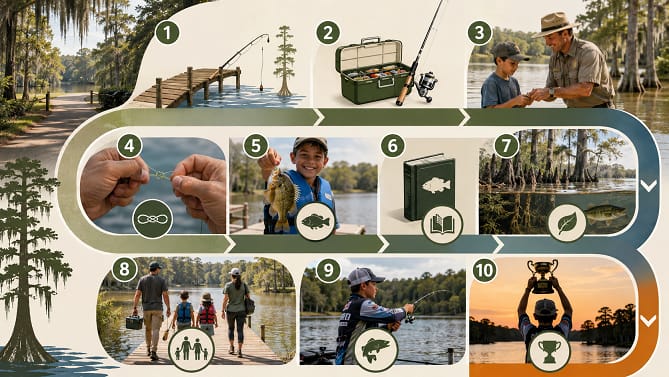
Caddo Lake’s Fishin’ Fridays show why the next generation of Texas anglers does not have to start with a bass boat, tournament entry fee, or expensive tackle setup. In July 2026, Caddo Lake State Park scheduled recurring Fishin’ Friday programs on July 10, July 17, July 24, and July 31, giving beginners a simple way to borrow gear, fish from the pier, and learn basics from a ranger. For Texas Sportsmen readers, that matters because beginner access is the first layer of the angler pipeline. Before a young fisherman joins a high school team or a family enters a local tournament, someone has to make the first cast feel possible.
Why Fishin’ Fridays Make Fishing Less Intimidating
A new angler’s biggest barrier is often not interest. It is gear, confidence, and knowing where to start. Caddo Lake State Park’s Fishin’ Friday program removes several of those barriers at once. The official Texas Parks and Wildlife Department event page says all ages can use the park’s free Tackle Loaner Program, with rods available to borrow and bait available while supplies last. A ranger is also present to teach the basics, including simple fishing knots.
That setup matters because beginner fishing can become too complicated too quickly. A family may not know what rod to buy, what bait to use, where to stand, what rules apply, or whether children will lose interest before the first bite. A ranger-led program beside the water turns those questions into a guided first step.
The official Fishin’ Friday event listing also places the program at the fishing pier and tells visitors to bring drinking water, sun protection, bug spray, and a camera. That is practical, not flashy. It frames fishing as a normal state park activity that families can try without owning a boat.
That is the point. A strong fishing culture needs low-pressure entry points. Not every beginner is ready for open water, tournament weigh-ins, or advanced electronics. Some need a borrowed rod, a pier, a ranger, and enough time to learn without embarrassment.
How Caddo Lake Gives Beginners A Serious Outdoor Setting
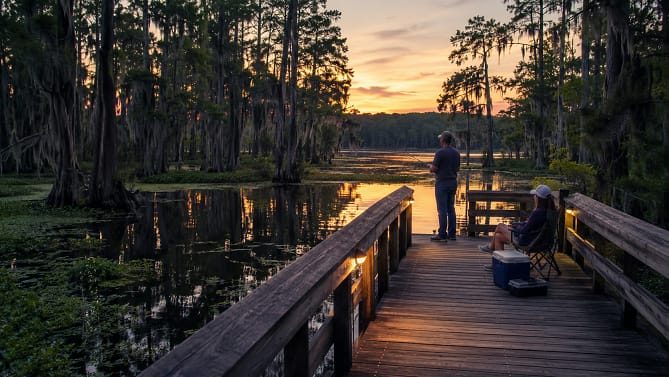
Caddo Lake is not a generic park pond. It is one of the most distinctive fishing settings in Texas, with bayous, bald cypress trees, shallow water, aquatic vegetation, and a state-line fishery shared with Louisiana. TPWD’s Caddo Lake State Park page says more than 70 species of fish live there, and the park highlights paddling beneath towering bald cypress trees as part of the visitor experience.
That makes Fishin’ Fridays more valuable. Beginners are not learning in a sterile setting. They are being introduced to real East Texas water, real habitat, and a lake with enough complexity to keep anglers learning for years.
Caddo’s fishing identity includes bass, crappie, sunfish, catfish, white bass, and other species. For a beginner, that variety matters because early success does not have to mean landing a trophy bass. A small sunfish, a catfish bite, or a first fish from the pier can be enough to create interest. From there, a young angler can begin asking better questions about habitat, bait, casting, fish behavior, and seasonal patterns.
The setting also helps teach respect for water. Caddo’s cypress maze and shallow nature make it beautiful, but they also remind anglers that Texas fishing is tied to habitat. A beginner who learns on a lake like Caddo is learning that fishing is not only about catching. It is about understanding where fish live.
Why The Tackle Loaner Program Matters For Family Access
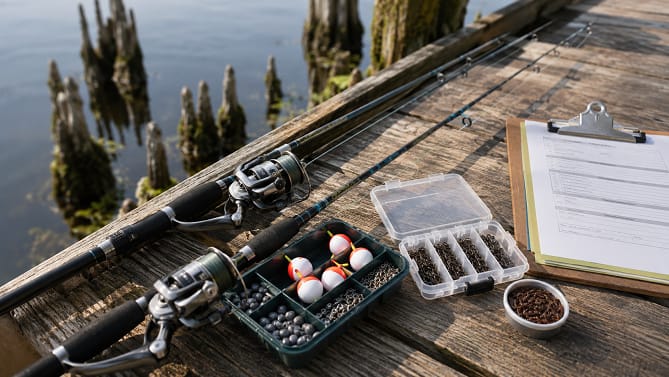
The phrase “No fishing rod? No problem!” is more than a promotional line. It explains why state parks can reach families that private fishing settings may miss. TPWD’s Tackle Loaner Program works like a library for fishing equipment: visitors can borrow rods, reels, and basic tackle such as bobbers, weights, and hooks, then return the gear after fishing.
That matters for cost. A family trying fishing for the first time may not want to buy multiple rods, tackle boxes, licenses, bait, and accessories before knowing whether the activity will stick. A loaner program lets them test the sport before committing money.
It also matters for inclusion. A child does not need to come from a tournament family to get started. A parent does not need to know all the gear terms. A grandparent can bring a kid to the park and let the ranger help. A visitor can show up curious and leave with a real first experience.
This connects naturally with previous Texas Sportsmen coverage of San Antonio public fishing rules, where urban access showed how public water can introduce new anglers before they enter more advanced fishing environments. Caddo Lake pushes that idea into a state park setting, where equipment access, staff guidance, and habitat all come together.
How A Pier Can Become The First Step Toward Competitive Fishing
A fishing pier may look simple compared with a bass boat deck, but it can teach skills that later matter in competitive fishing. A beginner learns how to cast safely, keep gear organized, wait for a bite, handle hooks, watch line movement, and respect other anglers in a shared space.
Those habits carry forward. A student who later joins a high school fishing team still needs patience, rule awareness, line control, fish handling, and respect for shared water. Those skills do not appear suddenly at a tournament ramp. They are built during small early experiences.
| Beginner Skill | How Fishin’ Fridays Can Teach It | Why It Matters Later |
|---|---|---|
| Casting Control | Ranger guidance and pier spacing help beginners practice safely | Reduces unsafe habits around boats, banks, and crowds |
| Knot Tying | Rangers can teach simple fishing knots during the event | Builds independence before tournament or lake trips |
| Gear Familiarity | Loaner rods let new anglers learn basic equipment | Makes future tackle choices less confusing |
| Patience | Pier fishing teaches waiting, watching, and adjusting | Helps young anglers handle slow tournament days |
| Public-Water Etiquette | Shared park space teaches respect for other users | Supports better behavior at ramps, piers, and weigh-ins |
That is why Fishin’ Fridays should not be treated as a casual side activity. They can be the first structured lesson in a long angling pathway.
Why Caddo Lake’s Rules Add A Conservation Lesson
Beginner programs work best when they teach rules early. Caddo Lake is especially useful because its regulations make anglers think carefully about state lines, invasive species, consumption advisories, and special fishery rules.
TPWD’s Caddo Lake fishing regulations page warns that the law requires draining water from boats and onboard receptacles when leaving or approaching public fresh waters to combat invasive zebra mussels. It also notes a fish consumption advisory and says transporting live non-game fishes from Caddo Lake to another water body is unlawful.
Those details matter even for beginners who are fishing from a pier. They show that fishing is not rule-free recreation. It is a public-water activity with responsibilities attached.
This also connects with the recent Texas Sportsmen article on Lake Meredith’s zebra mussel infestation. That story focused on tournament anglers moving boats between lakes, but the principle begins earlier. New anglers should learn that invasive species, bait movement, fish consumption, and waterbody-specific rules are part of the sport.
A state park program can teach those ideas in plain language. That is far better than waiting until someone makes a mistake at a ramp, tournament, or cleaning table.
How State Parks Can Build Anglers Before Tournaments Do
Texas tournament culture is strong, but tournaments cannot be the only recruitment system. New anglers need places where they can learn without pressure. Caddo Lake State Park gives them that through recurring July programming, ranger support, loaner tackle, and a pier-based format.
That matters because the state’s angler pipeline has several stages. Public parks introduce the sport. Families reinforce the habit. School programs can create competitive structure. Local tournaments test skills. Larger circuits give serious anglers another goal. Each stage depends on the one before it.
Previous Texas Sportsmen coverage of Southeast Texas high school fishing showed how organized youth competition can build serious anglers at lakes such as Sam Rayburn and Toledo Bend. Caddo Lake’s Fishin’ Fridays represent an earlier step in the same pathway. Before a student manages a two-day championship, they may need a free rod, a ranger, and a first fish from a pier.
State parks are well positioned for that role. They are public, family-oriented, and built around education as much as recreation. They can make fishing feel accessible before it feels competitive.
Why No-Boat Fishing Deserves More Attention
Texas fishing coverage often focuses on boats, tournaments, guides, electronics, offshore runs, and big-water strategy. Those topics matter, but they can make the sport look expensive to outsiders. No-boat fishing deserves more attention because it keeps the entry door open.
A pier, bank, or park pond can introduce anglers who may never buy a boat. Some may remain casual anglers. Some may become serious bank fishermen. Some may eventually join school programs, fish tournaments, or travel to larger lakes. The important point is that they were not excluded at the start.
Caddo Lake’s Fishin’ Fridays show how public programs can make that possible. The event is free with paid park admission or a Texas State Parks Pass, and TPWD’s listing says children 12 and under are free while admission is $4 per person for visitors 13 and older. That pricing keeps the experience within reach for many families.
The no-boat angle also helps protect the future of the sport. If fishing becomes too closely associated with expensive boats and elite gear, participation narrows. State parks can widen it again by showing that fishing still begins with water, patience, and instruction.
What Other Texas Parks Can Learn From Caddo Lake
Caddo Lake’s July Fishin’ Fridays offer a useful model for other Texas parks. The formula is simple: recurring dates, ranger support, loaner gear, bait while supplies last, a beginner-friendly location, and clear visitor instructions. That is not complicated, but it is powerful.
The recurring schedule matters. A single event can be missed. A series gives families multiple chances to attend. In July 2026, Caddo Lake’s park events page listed Fishin’ Friday sessions on July 10, July 17, July 24, and July 31, all built around the same beginner-friendly message.
That repetition helps normalize fishing. It tells families that angling is not a one-off novelty. It is part of the park’s summer rhythm.
Other parks can use the same approach. They can combine fishing with kayaking, hiking, wildlife education, junior ranger programs, and conservation lessons. The goal is not to manufacture tournament anglers instantly. The goal is to create confident outdoor users who understand water, rules, gear, and responsibility.
Why The Next Generation Starts At The Pier
Caddo Lake’s Fishin’ Fridays matter because they prove Texas does not need to wait until kids reach a tournament team to build anglers. The process can start at a pier, with a borrowed rod and a ranger explaining how to tie a knot.
That first step may look small, but it can shape everything that follows. A beginner who feels welcome may return. A family that borrows gear may buy its own later. A young angler who catches a sunfish may start asking about bass. A visitor who learns the rules at a park may become a more responsible lake or tournament angler later.
Texas fishing needs major tournaments, serious anglers, and competitive pathways. It also needs simple public programs that make fishing less intimidating. Caddo Lake State Park is showing how that can work.
The next generation of Texas anglers will not all start from boats. Some will start from a pier, with borrowed tackle, at a state park that made the sport feel reachable.