
Baffin Bay Upgrades moved from wish-list talk to funded public access work on August 20, 2026, when Congressman Vicente Gonzalez announced $850,000 in FY2026 federal Community Project Funding for Kleberg County’s Baffin Bay. For anglers, guides, families, tournament organizers, marine students, and public safety crews, the announcement mattered because it addressed the practical parts of a fishing day: launching, parking, walking a pier, staying visible near the water, and protecting a shoreline that supports access.
The funding did not arrive as a stand-alone fishing headline. It sat inside a broader package of $12.6 million in federal funds for 15 community projects secured by Rep. Gonzalez, with the Baffin Bay work described as recreational and public safety improvements, according to the official announcement from Rep. Gonzalez. That framing is useful for local anglers because it shows the project is about more than comfort. It is about access, safety, shoreline durability, and the way fishing infrastructure supports nearby communities.
What Baffin Bay Upgrades Funded
Baffin Bay Upgrades At The Ramp
The project list starts with a single-lane boat ramp. In a bay system where access points shape where effort begins, a ramp is not a minor detail. A better launch site can reduce crowding pressure at other ramps, shorten travel time for anglers, and make trips more workable for smaller crews hauling trailers before daylight.
The Baffin Bay Upgrades also included work on the fishing pier, with plans to raise the deck for higher tides, add safety railings, install solar lighting, and extend the deck and landing. Those items matter for pier anglers who may not own a boat, older anglers who want a steadier platform, and families introducing kids to saltwater fishing without committing to a full boat day.
Pier Safety And Parking Flow
The parking component was concrete and specific: repair work for a 4,250-square-yard parking lot for boat trailers. Anyone who has tried to turn around with a trailer in a tight, worn, or crowded lot knows that parking is part of the launch sequence. Poor parking can slow down early-morning starts, create safety concerns, and make casual anglers think twice about a trip.
The federal funding also covered shoreline erosion mitigation through breakwater improvements. That piece connects directly to long-term access. A pier, ramp, and parking area are only as dependable as the shoreline that supports them. If erosion continues unchecked, the public access point can become more costly to maintain and harder to use after high water or storm-driven conditions.
Why Access Matters On Tournament And Family Fishing Days
For Guides, Families, And Casual Anglers
Fishing communities are built around repeatable routines. A guide needs a dependable launch. A parent needs a safe place to help a child carry tackle. A weekend angler needs trailer space. A pier regular needs lighting, railings, and a deck set up for changing water. None of that guarantees fish, but it can make the trip more organized and safer.
That is where local infrastructure meets the sports side of fishing. Anglers still need to read wind, tide, water clarity, bait movement, and seasonal patterns. But public access decides who can take part. A boat ramp and pier help widen the field beyond anglers with private docks or specialized access.
For readers tracking similar public-access work around the bay, our earlier report on Baffin Bay access work covered the announcement as a key Kleberg County fishing project. The new funding analysis adds the community angle: how one access point can affect trip planning, youth exposure, education, and public safety.
Community Event Planning
Local fishing events depend on predictable meeting points. Even smaller gatherings need places where trucks can stage, trailers can move, and families can meet after weigh-ins or shoreline fishing sessions. Better access does not create an event calendar by itself, but it can help organizers plan around a safer and more useful public site.
There is also a sports tourism piece, though it should be kept in scale. The Gonzalez announcement said the improvements are expected to attract ecotourism, support law enforcement and border protection operations, and serve as infrastructure for student training and retention in South Texas. That is a broad civic use case, but the fishing connection is direct: the same ramp, pier, parking area, and shoreline protections that serve anglers can also serve research crews, education groups, and public agencies.
Water Quality Work Behind The Fishing Story
The RESTORE Water Quality Piece
Access is only one side of the Baffin Bay story. Water quality work has also received formal funding attention. On December 17, 2025, the Gulf Coast Ecosystem Restoration Council approved $2,713,201.17 for ecosystem restoration in Texas, including $1,000,000 for implementation of the Improving Baffin Bay Water Quality project, as listed by RestoreTheGulf.gov.
For anglers, that matters because public access and water quality are linked in everyday fishing decisions. A clean, fishable bay supports better participation. A shoreline project helps people reach the water. A water quality project addresses conditions that can affect habitat, bait, and the long-term health of the fishery. The two tracks should not be treated as the same project, but they point toward the same local concern: keeping Baffin Bay usable for fishing communities.
What The Funding Does Not Promise
It is fair to keep expectations grounded. The $850,000 access award funded specific infrastructure improvements. It did not publish a schedule in the provided announcement for when every ramp, pier, parking, or breakwater item would be completed. It also did not promise higher catch rates, more tournaments, or a set number of tourism jobs. Those outcomes depend on construction timing, water conditions, angler participation, maintenance, and local planning.
That distinction matters because anglers know the difference between better access and better fishing. Access gets you to the water. Conditions and skill still decide the day. Wind direction, tides, freshwater inflow, water clarity, bait presence, and seasonal fish movement remain part of the equation on Baffin Bay.
How Local Programs Can Use Better Shoreline Infrastructure
Marine Students And Field Training
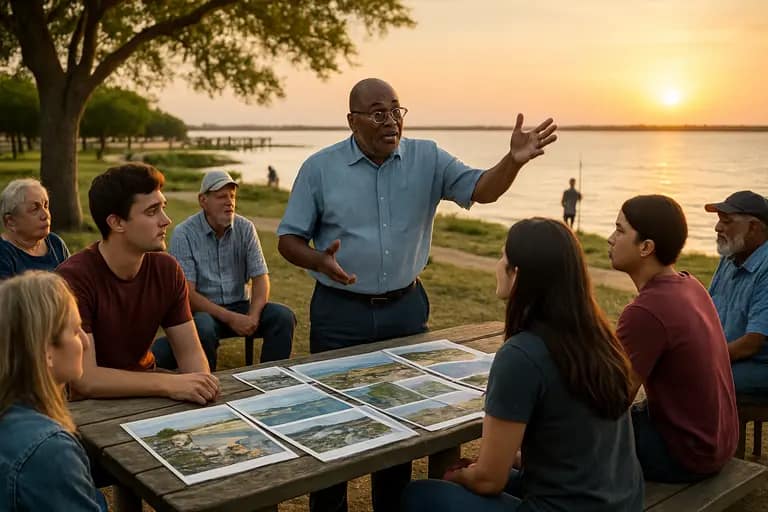
The Gonzalez announcement connected the project to Texas A&M University-Kingsville’s Marine Biology Program, noting that the enhancements would support marine research and education. That point should resonate with fishing families because many young Texans learn coastal stewardship first through simple access: standing on a pier, launching with a relative, helping check gear, or seeing how shoreline conditions affect fish and habitat.
A safer pier and improved launch area can give instructors and students a more practical base for field work. It can also help local students see that fishing, science, and public service are connected. Baffin Bay is not just a place to catch fish. It is a living classroom where access, habitat, water quality, and community use meet.
Outdoor Community Connections
Fishing does not happen in isolation from the rest of the outdoor community. Boats need towing, families plan around gear, and coastal trips often involve more than one sport or hobby. For readers who follow outdoor access and motorsports coverage across the same network, sites like Triple T Powersports demonstrate how equipment, travel, and local recreation connect.
The key for Baffin Bay is keeping that connection grounded in public benefit. A better pier helps bank and pier anglers. A better ramp helps boaters. A better parking lot helps families and trailer traffic. Breakwater improvements help protect the site that makes all of those uses possible. That is how one project can touch several groups without losing its fishing-first purpose.
Baffin Bay Upgrades And The Fishing Community
The best reading of Baffin Bay Upgrades is that the project strengthens the starting point for local fishing. It gives boaters a planned single-lane ramp, gives pier anglers a safer and more useful platform, gives trailer users a repaired parking area, and gives the shoreline added protection through breakwater work. Those are practical gains, not abstract promises.
For Kleberg County and the wider Baffin Bay fishing community, the value will be measured trip by trip. Can anglers launch with less stress? Can families use the pier more safely? Can students and researchers work from the site more easily? Can public safety crews use the access point when needed? Those are the questions that matter after the funding announcement.
The water quality funding approved in December 2025 adds a second track that anglers should keep watching. Good access and healthier water are different goals, but fishing communities need both. One gets people to the bay. The other helps protect the resource that brings them there. On that score, the 2026 access award gave Baffin Bay a concrete win, while the broader restoration work kept attention on the bay’s long-term fishing future.