
Tournament fishing has always relied on trust—between anglers, organizers, and the audience watching from the docks. But in 2026, that trust is being tested. A high-profile cheating scandal out of Texas freshwater tournaments, involving manipulated fish weights and falsified results, has sent shockwaves through the competitive fishing world.
What makes this moment different isn’t just the incident itself—it’s the reaction. Circuits, sponsors, and anglers are now openly questioning whether current rules are strong enough to protect the integrity of competition. And while the controversy began in freshwater, the conversation is quickly moving toward the coast.
For Texas redfish tournaments, the question is no longer hypothetical: are stricter enforcement measures on the way?
Why Integrity Matters More In Redfish Tournaments
Redfish tournaments operate on tight margins. Often, a few ounces separate first place from the rest of the field. That level of precision means any form of manipulation—even small—can completely alter outcomes.
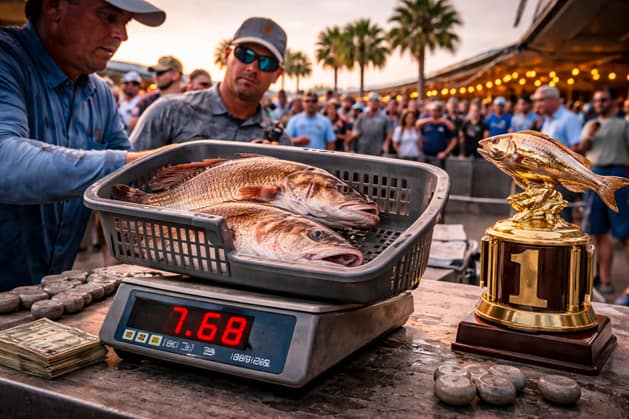
Unlike some freshwater formats, many redfish events rely on:
- Live weigh-ins
- Catch-photo-release verification
- On-the-water honor systems
These systems have worked for years because the culture of Texas coastal fishing has emphasized respect for both the fishery and the competition. But as participation grows and prize pools increase, the stakes are changing.
More money and more visibility naturally bring more scrutiny—and unfortunately, more opportunity for abuse.
What The Recent Scandals Actually Revealed
The recent incidents didn’t just expose individual wrongdoing—they exposed vulnerabilities in tournament systems.
Issues that surfaced include:
- Lack of standardized inspection procedures
- Inconsistent verification across events
- Limited real-time monitoring of anglers on the water
According to reporting highlighted by major tournament enforcement discussions, organizers are now reevaluating everything from weigh-in protocols to pre-event inspections.
For coastal tournaments, the takeaway is clear: what happened elsewhere can happen anywhere if safeguards aren’t strengthened.
Early Signs Of Rule Changes In Texas
While no sweeping regulations have yet been announced specifically for redfish tournaments, early signals suggest that change is coming.
Tournament directors across Texas are already discussing:
- More rigorous pre-launch boat inspections
- Randomized checks during competition hours
- Expanded use of digital verification tools
- Increased penalties for violations
Some events are even exploring the return of on-the-water observers for high-stakes competitions—a practice that had largely faded due to cost and logistics.
These conversations reflect a broader trend also seen in evolving formats like the Texas redfish tournament structure, where maintaining fairness is becoming just as important as attracting participation.
Technology As Both Problem And Solution
Interestingly, the same technology that has complicated competitive fishing may also help protect it.
Advanced cameras, GPS tracking, and timestamped photo systems are being integrated into tournament formats. These tools allow organizers to:
- Verify catch locations and timing
- Detect unusual patterns or inconsistencies
- Maintain a digital record of competition activity
Organizations like the Texas Parks and Wildlife enforcement division have long emphasized the role of monitoring and compliance in maintaining healthy fisheries, and tournament circuits are beginning to adopt similar principles for competition oversight.
Still, technology alone isn’t enough. It needs to be paired with consistent enforcement and clear rules.
The Cultural Impact On Texas Anglers
Beyond rules and regulations, the scandal has triggered something deeper—a cultural response within the fishing community.

Texas coastal anglers take pride in doing things the right way. Tournament fishing isn’t just about winning—it’s about reputation. Dock talk travels fast, and credibility matters.
As a result, many anglers are actually welcoming stricter enforcement. Not because they expect wrongdoing, but because they want to protect the integrity of the sport.
There’s a growing understanding that transparency strengthens competition, especially as tournaments continue to grow in size and visibility.
Will Stricter Rules Change How Anglers Compete?
If new rules are implemented, they will inevitably influence strategy—but not in the way some might expect.
Stricter verification doesn’t change how anglers find fish. It changes how they manage risk. Competitors will need to:
- Be more precise in documentation and handling
- Avoid borderline decisions that could raise questions
- Adapt to more structured competition environments
In many ways, this shift aligns with the broader evolution of tournament fishing in Texas, where professionalism is becoming part of the standard.
The Balance Between Enforcement And Accessibility
One of the biggest challenges moving forward will be maintaining balance. Too little enforcement risks damaging trust. Too much could make tournaments overly complicated or intimidating for newer anglers.
The goal for most organizers is clear: protect the integrity of competition without losing the accessibility that fuels participation.
That balance is especially important in Texas, where grassroots tournaments and elite circuits coexist. Rules must work across both levels without creating unnecessary barriers.
What This Means For The Future Of Texas Redfish Tournaments
The cheating scandal may have started outside the redfish world, but its impact is already being felt along the Texas coast.
Tournament fishing is entering a new phase—one where integrity, transparency, and enforcement are becoming central to the conversation. For anglers, this means adapting to a more structured environment. For organizers, it means building systems that can withstand both growth and scrutiny.
In the long run, these changes may strengthen the sport. Because at its core, competitive fishing depends on one thing above all else: a level playing field where every cast counts—and every result can be trusted