
Across the Texas coast, something subtle—but significant—is happening at tournament check-ins and weigh-ins. The field looks different. It’s not just seasoned teams and high-end rigs anymore. In 2026, more events are welcoming adaptive anglers, youth competitors, family teams, and first-time participants, and that shift is beginning to reshape the entire culture of tournament fishing.
Inclusive fishing events are no longer side initiatives or charity-driven one-offs. They are becoming a core part of how tournaments are structured, especially in redfish-heavy regions where accessibility and community participation naturally align.
What’s emerging is a broader, more diverse competitive environment—one that’s expanding both the reach and the identity of Texas tournament fishing.
How Inclusive Events Are Expanding Participation
The rise of inclusive formats is tied directly to growth. As tournament participation has surged, organizers have recognized that the future of the sport depends on lowering barriers without lowering standards.
In practical terms, that means creating entry points for anglers who might have previously stayed on the sidelines. Adaptive fishing programs, youth divisions, and community-driven events are introducing competitive fishing to a wider audience.
Recent coverage of adaptive fishing initiatives in Texas highlights how anglers with physical challenges are not only participating—but competing at a high level. These events are proving that tournament fishing can be both competitive and accessible at the same time.
This shift is especially important in a state like Texas, where coastal communities already have a strong connection to fishing as both a lifestyle and a tradition.
Why Redfish Tournaments Are Leading The Movement
Redfish tournaments are uniquely positioned to drive this inclusive growth. The nature of inshore fishing—relatively short runs, protected waters, and flexible formats—makes it more adaptable than many offshore or deepwater competitions.
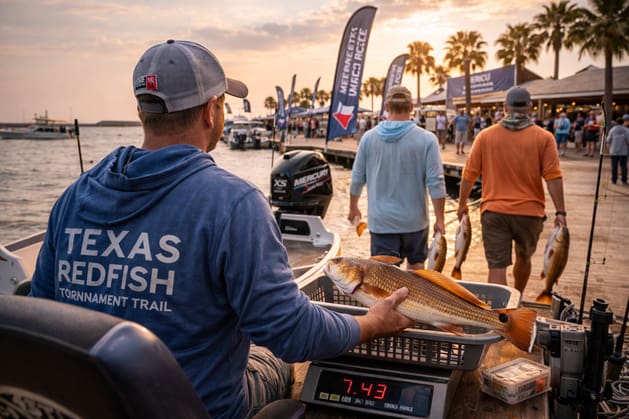
Unlike some tournament styles that require specialized equipment or extreme travel, redfish events can be structured to accommodate a wider range of participants without compromising competitiveness.
That’s one reason inclusive formats are gaining traction fastest within the redfish scene. It’s also why many organizers are incorporating these divisions alongside traditional formats, rather than separating them entirely.
This layered approach reflects the broader evolution of Texas tournament fishing, where the expanding tournament calendar is creating space for both elite competition and community-focused events to coexist.
The Role Of Community And Coastal Culture
In Texas, fishing has always been about more than just results. It’s about shared experiences—dockside conversations, early morning launches, and the kind of camaraderie that builds over time.
Inclusive events tap directly into that culture.
You see it in multi-generational teams where parents and kids fish together. You see it in adaptive anglers being supported by volunteers and fellow competitors. And you see it in local tournaments where the emphasis is just as much on participation as it is on placement.
This cultural layer is critical. It ensures that as tournament fishing grows, it doesn’t lose the community-driven identity that defines the Texas coast.
How Tournament Structures Are Adapting
As inclusivity becomes more central, tournament formats are evolving to support it. Organizers are adjusting rules, scoring systems, and logistics to accommodate a wider range of participants while maintaining fairness.
Some events now incorporate multiple divisions within the same tournament, allowing anglers to compete within appropriate categories without fragmenting the field entirely. Others are introducing mentorship-based formats, where experienced anglers partner with newer competitors.
These adjustments are not just about access—they’re about sustainability. A more inclusive tournament structure creates a pipeline of future competitors, ensuring that participation continues to grow over time.
Balancing Accessibility With Competitive Integrity
One of the key challenges facing tournament organizers is maintaining balance. Inclusivity must be paired with consistency, especially in events where prize money and rankings are on the line.
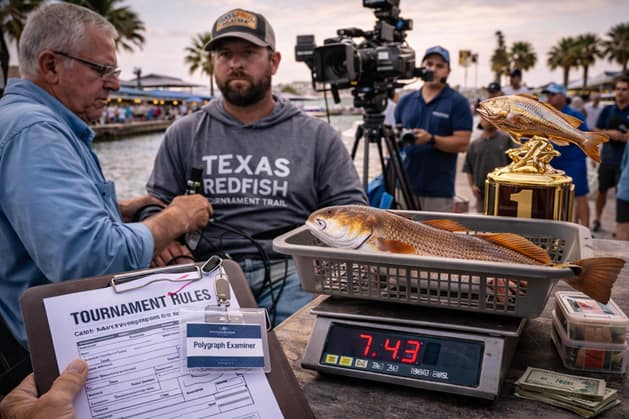
The goal is not to dilute competition, but to broaden it.
That means:
- Ensuring rules are applied consistently across divisions
- Maintaining clear scoring and verification systems
- Creating formats where skill remains the defining factor
Organizations like the Texas Parks and Wildlife Department fishing programs continue to emphasize responsible growth and structured management, and tournament circuits are increasingly aligning with those principles.
When done correctly, inclusivity doesn’t weaken competition—it strengthens it by expanding the talent pool.
The Long-Term Impact On Texas Fishing
The growth of inclusive fishing events is already influencing the future of tournament participation. More anglers are entering the sport earlier, gaining experience faster, and staying engaged longer.
That has a compounding effect.
As participation increases, so does:
- Competitive depth across tournaments
- Demand for structured circuits and divisions
- Awareness around conservation and responsible fishing
In many ways, inclusive events are acting as the foundation for the next generation of Texas anglers—feeding directly into the competitive systems that continue to evolve across the coast.
What This Means Moving Forward
The rise of inclusive fishing events isn’t a trend—it’s a transformation. Texas tournament fishing is becoming more open, more dynamic, and more reflective of the communities that support it.
For anglers, that means more opportunities to compete. For organizers, it means building formats that can scale without losing identity. And for the Texas coast, it reinforces something that has always been true:
Fishing here isn’t just about who wins—it’s about who gets to be part of it.
As 2026 continues to unfold, inclusive events will likely play an even bigger role in shaping the competitive landscape. And if current momentum holds, they won’t just support the future of tournament fishing—they’ll define it.